 listicle
Best Metal Carport for Wide RV Storage
Table of Contents
- What Makes a Metal Carport Suitable for Wide RV Storage
- RV Carport Size Guide: Dimensions That Actually Work
- Roof Styles for Wide RV Carports
- Top Metal Carport Options for Wide RV Protection
- Site Preparation for RV Carports
- Wind and Snow Load Engineering for Wide Spans
- DIY vs. Professional Installation
- Permitting and Zoning Regulations
- Frequently Asked Questions
Last Updated: September 18, 2026
What Makes a Metal Carport Suitable for Wide RV Storage
The best metal carport for wide RV storage combines generous width, sufficient height, and durable materials that withstand the elements without requiring constant maintenance.
Class A motorhomes often exceed 13 feet in width, and many travel trailers push 14 feet or more. A standard 12-foot-wide carport becomes a tight squeeze or unusable. You also need peak height that accommodates high-profile RVs without forcing you to park at an angle or leave your roof exposed.
Galvanized steel framing resists rust in humid climates, and engineered trusses handle snow loads that would collapse lesser structures. The right carport protects your investment from UV damage, hail, and weather deterioration while keeping costs reasonable compared to fully enclosed buildings.
At Metal Carport Depot LLC, we offer custom-sized structures that meet local wind and snow load requirements, and free professional installation ensures your carport is anchored correctly from day one.
RV Carport Size Guide: Dimensions That Actually Work
Width Requirements for Different RV Classes
Class A motorhomes typically measure 12 to 13 feet wide, travel trailers and fifth wheels range from 8 to 14 feet, and toy haulers can exceed 14 feet.
A 16-foot width provides minimal clearance. For practical comfort and to avoid side-panel damage, aim for 20 feet or wider. A 24-foot width is ideal for most RVs, offering ample side clearance and room to work around your vehicle. For dual-RV storage, 30 feet becomes the practical minimum.
Measure your RV from bumper to bumper and add 2-3 feet for maneuvering room. A 40-foot length accommodates most Class A and Class C motorhomes; travel trailers typically need 25 to 35 feet.
Height Clearance and Peak Specifications
Peak height (distance from ground to the roof's highest point) matters more than eave height. Class A motorhomes stand 12 to 13.5 feet tall; some specialty RVs exceed 14 feet. For safety and to avoid antenna or roof damage, target a peak height of at least 15 feet.
Standard eave height should be at least 12 feet for most RVs to ensure you can drive in without the roof cutting into your vehicle's profile.
Vertical roof designs push peak height higher than boxed-eave or regular roof styles, making them ideal for tall RVs. A vertical roof with a 14-foot eave and 18-foot peak provides substantial clearance for even the largest motorhomes.
Roof Styles for Wide RV Carports
Vertical Roof Design
A vertical roof design features straight walls that extend partway up before the roof slopes inward at a steep angle, maximizing usable interior height and excelling at shedding snow and rain.
Vertical roofs are engineered for high wind and heavy snow loads. The steep slope prevents snow accumulation, reducing structural stress and improving survival rates during heavy snow events.
Vertical roofs cost more than simpler designs because they require additional framing and engineering. For wide spans exceeding 24 feet, the structural advantages often justify the added expense.
Boxed Eave and Regular Roof Styles
A boxed-eave carport features a lower-pitched roof that extends evenly from both sides, suiting moderate climates and providing adequate protection for most RVs in regions without extreme snow loads.
Regular roof designs use a simpler truss system with a gentler slope and are the most affordable option for mild climates. However, they shed snow less efficiently than vertical designs and aren't recommended in heavy-snow areas.
For wide RV storage, boxed-eave and regular roofs work best when your local snow load is light to moderate. In high-wind or heavy-snow regions, the structural engineering required for wide spans makes a vertical roof the safer choice.
Top Metal Carport Options for Wide RV Protection
Metal Carport Depot LLC: Custom Engineer-Certified Structures
Metal Carport Depot LLC specializes in custom-engineered metal carports for wide RV storage, with every structure designed to your exact specifications and certified for your local wind and snow loads. Ensuring your vehicle remains protected requires careful consideration of various caravan storage methods to maintain its structural integrity throughout the seasons.
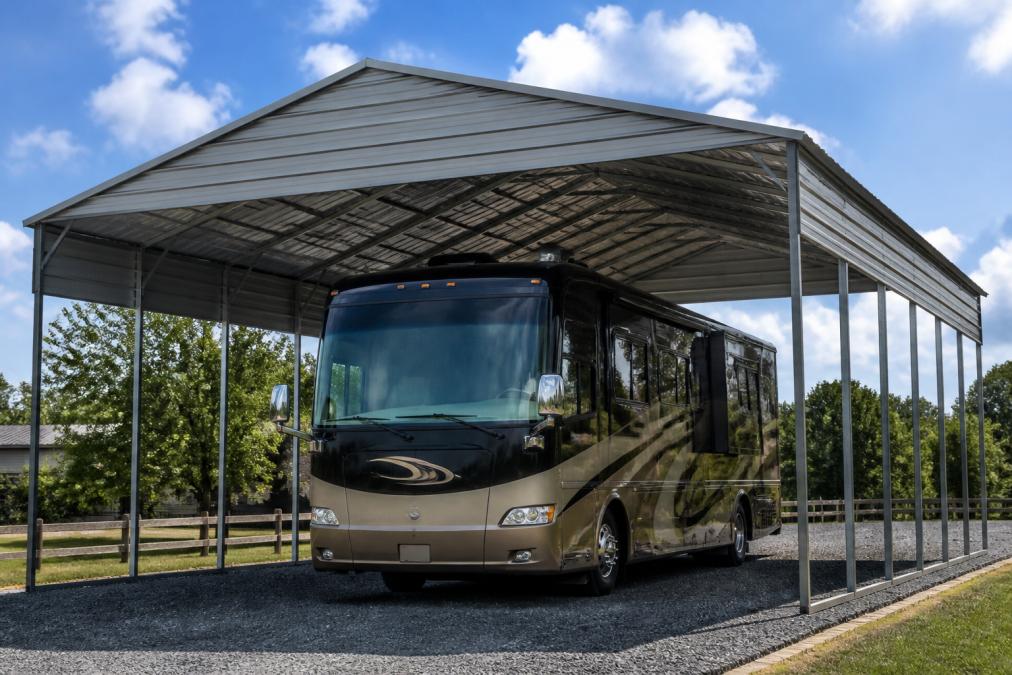
The 3D design tool lets you configure your carport online and see exactly what you're building. The system automatically calculates load requirements for your zip code and adjusts the structure accordingly.
Free delivery and installation within the service area remove the biggest friction point in carport buying. Metal Carport Depot LLC handles the entire process.
Engineered drawings are provided for building permits, which means no surprises when your local inspector reviews the structure.
The custom-sizing approach eliminates the compromise of standard sizes, your carport is designed for your RV, not the other way around.
Freedom Fighter Metal Carport: Wide-Span Standard Solution
You're locked into those dimensions. If your RV is 14 feet wide or your driveway slopes, you can't adjust the carport to fit.
American Metal Buildings Vertical Roof: Heavy-Duty Performance
This option suits buyers who live in extreme-weather regions and view the carport as a long-term investment in protection.
General Steel Buildings VersaTube: Modular Customization
Custom quotes are required, which adds time to the buying process but ensures the structure is tailored to your exact requirements and local regulations.
Site Preparation for RV Carports
Foundation Types: Concrete, Gravel, and Dirt
Three main foundation options exist: concrete slabs, gravel pads, and compacted dirt.
A concrete slab is the gold standard, providing a level, stable base that resists settling and shifting. The upfront cost is higher, but long-term durability justifies the investment for wide-span structures.
A gravel pad costs less than concrete and works well in regions with good drainage. Over time, gravel compacts and can shift, requiring occasional raking and leveling.
Compacted dirt is the most economical option but the least stable. For wide-span carports carrying significant snow loads, compacted dirt alone is risky. Many jurisdictions require concrete or gravel for structures above a certain size.
Site Leveling and Anchor Systems
Your site must be level or nearly level before installation. Slopes exceeding 2-3% can cause structural misalignment and accelerate wear on anchor points.
Wind and Snow Load Engineering for Wide Spans
Wide-span carports experience greater stress than narrow ones. A 30-foot-wide structure catches more wind surface area and distributes snow load across a longer unsupported span.
DIY vs. Professional Installation
DIY carport building saves labor costs but introduces significant risks. Assembly requires heavy equipment, proper sequencing, and knowledge of local building codes.
Permitting and Zoning Regulations
Most jurisdictions require building permits for carports, particularly structures exceeding a certain size. Generally, any permanent structure requires approval before construction begins.
| Consideration | DIY Installation | Professional Installation |
|---|---|---|
| Equipment Required | Heavy machinery, tools | Included in service |
| Timeline | Weeks to months | Days |
| Code Compliance | Your responsibility | Contractor's responsibility |
| Warranty/Guarantee | Limited | Company-backed |
| Risk of Mistakes | High | Low |
| Permitting Support | You handle it | Often included |
Frequently Asked Questions
What size metal carport do I need for my RV?
The right size depends on your RV's dimensions. Most Class A motorhomes need at least 14 feet of width and 35-40 feet of length. Class B and C models typically require 10-12 feet of width and 25-30 feet of length. Height clearance should be at least 1-2 feet above your RV's highest point to allow airflow and prevent damage. Use your RV's specifications and measure from your driveway to determine exact requirements before ordering.
What is the best roof style for a metal RV carport?
Vertical roof designs are superior for RV carports because they shed snow and rain more effectively, reducing weight accumulation and water pooling. Boxed eave roofs offer moderate drainage and a cleaner appearance. Regular roof styles are the most economical but less effective in heavy snowfall or rain regions. Choose based on your local climate: vertical roofs excel in high-snow or high-wind areas, while boxed eave or regular styles work fine in moderate climates.
Why choose engineer-certified metal structures over standard carports?
Engineer-certified metal structures are designed to meet your specific local wind and snow load requirements, ensuring the carport won't fail under extreme weather. Certified structures come with engineered drawings that satisfy building permit requirements, preventing costly delays or rejections. They also provide better structural integrity for wide spans, which need reinforced trusses and proper load distribution. Certification gives you documented proof that your carport meets code and protects your investment.
What foundation type is best for a metal RV carport?
Concrete piers or a full concrete slab provide the strongest, longest-lasting foundation and are required by most building codes for permanent structures. Concrete distributes weight evenly and resists frost heave in cold climates. Gravel bases work for temporary structures in stable soil but require ongoing maintenance and raking. Dirt foundations are not recommended for wide-span carports because they shift over time, compromising structural integrity. Your local building code and soil conditions will determine which option meets requirements.
Can I install a metal RV carport myself, or do I need professionals?
Wide-span metal carports require professional installation due to the complexity of aligning trusses, anchoring systems, and meeting local building codes. DIY assembly is possible for smaller, simpler kits, but wide RV carports need proper equipment, expertise, and building permits. Professional installation ensures the structure is level, properly anchored, and inspected for code compliance. Many suppliers include free professional installation, which eliminates liability concerns and guarantees the work meets specifications.
Choosing the best metal carport for wide RV storage means matching structure dimensions to your RV's size, selecting a roof style suited to your climate, and ensuring professional installation protects your investment. Metal Carport Depot LLC simplifies this process with custom engineering, transparent pricing, and included installation across 37 states. Call 1-800-324-5315 to configure your carport online and get an instant quote tailored to your exact needs and local weather requirements.