 how-to
Preventing Rust on Metal Carports: 2026 Maintenance Guide
Table of Contents
- Why Metal Carports Rust and What Accelerates It
- How to Clean a Metal Carport Before Rust Takes Hold
- Signs of Structural Rust Damage You Should Never Ignore
- Best Rust-Inhibiting Paint for Steel Carports
- Rust Prevention by Climate Zone and Maintenance Schedule
- DIY vs. Professional Coating Application: What Works Best
- Frequently Asked Questions
Last Updated: September 25, 2026
Why Metal Carports Rust and What Accelerates It
Rust is the slow breakdown of steel that starts the moment bare metal meets moisture and oxygen. On a metal carport, that process rarely spreads evenly. It attacks edges, scratches, and the underside of roof panels first, which is why catching it early matters so much. This guide from Metal Carport Depot LLC covers preventing rust on metal carports, how to clean and coat your structure, and which maintenance schedule fits your climate.
How Galvanized Steel Fights Corrosion
Galvanization is a zinc coating applied to steel that sacrifices itself to protect the metal underneath. When the zinc meets moisture, it corrodes first. The steel stays intact. That is the whole trick behind galvanized steel carports, and it is why a quality frame can last decades with basic care.
Environmental Factors That Speed Up Oxidation
Moisture is the fuel, but not all moisture behaves the same. Humidity control and ventilation decide how long water sits on the metal. Here is what drives oxidation fastest:
- Salt air and chloride exposure near coasts
- Condensation from temperature swings between day and night
- Trapped debris like leaves and dirt that hold water against the surface
- Acid rain and industrial pollution that lower surface pH
- Constant shade that stops panels from drying out
How to Clean a Metal Carport Before Rust Takes Hold
Regular cleaning is the cheapest rust prevention you can do. Dirt, bird droppings, and pollen hold moisture against the steel and slowly break down the coating. Wash the structure at least twice a year, and more often near salt air or heavy tree cover.
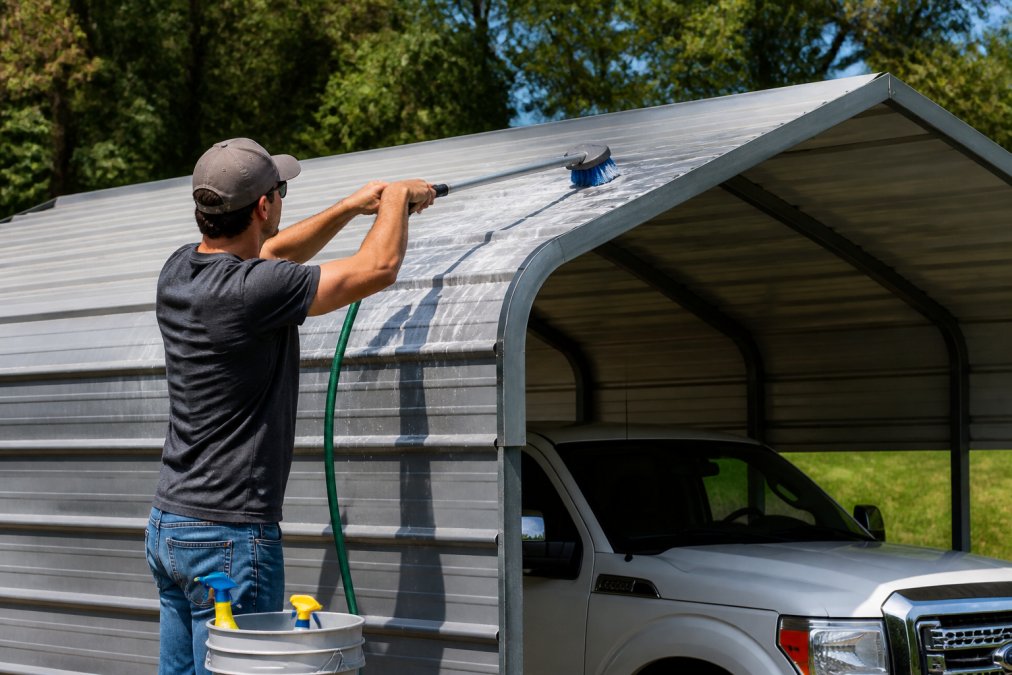
Step-by-Step Cleaning for Steel Carports
- Rinse the whole structure with a garden hose to loosen loose dirt.
- Mix a pH-neutral cleaner with warm water in a bucket.
- Scrub panels and framing with a soft brush or long-handled pole brush.
- Work top to bottom so dirty water does not run onto clean areas.
- Rinse thoroughly and check for any spots you missed.
- Dry the surface with a squeegee or let it air dry fully.
- Inspect seams, edges, and the underside of the roof while it is dry.
A common mistake is using a harsh or acidic cleaner. It strips the protective finish and leaves the steel more exposed than before you started. Stick with a pH-neutral cleaner and a soft brush.
Signs of Structural Rust Damage You Should Never Ignore
Surface rust is cosmetic. Structural rust is a safety issue. The difference is depth and location. Knowing the signs of structural rust damage helps you decide whether a repair is enough or whether the frame needs a professional look.
Watch for these red flags:
- Flaking or pitted metal where rust has eaten into the thickness
- Soft spots that give when you press on the framing
- Cracks at welded joints or where legs meet the roof
- Sagging roof lines or panels that no longer sit flat
- Rust bleeding from bolt holes and connection points
- Metal fatigue shown by repeated bending or movement
Best Rust-Inhibiting Paint for Steel Carports
The best rust-inhibiting paint for steel carports is a system, not a single can. You need a rust-inhibiting primer to stop oxidation, then an outdoor-rated topcoat to seal out moisture. Skipping the primer is the most common reason paint fails within a season.
Here is how the main options compare:
| Coating Type | Best For | Key Strength | Watch Out For |
|---|---|---|---|
| Rust-inhibiting primer | Bare or sanded steel | Bonds to metal, blocks oxidation | Needs a topcoat over it |
| Epoxy coating | High-wear areas | Tough, chemical-resistant | Can chalk in strong sun |
| Direct-to-metal paint | Small touch-ups | One-step, fast | Less durable long term |
| Elastomeric sealant | Seams and joints | Flexes with the metal | Not a full-panel finish |
Surface Preparation Before Painting
Paint sticks only as well as the surface allows. Surface preparation is where most DIY jobs fail. Follow these steps:
- Remove all loose rust with a wire brush or abrasive cleaning pad.
- Degreasing the surface to strip oils and dirt.
- Sand glossy or previously painted areas so the new coat can grip.
- Wipe the surface clean and let it dry completely.
- Apply the primer in thin, even coats.
- Let the primer cure per the label before the topcoat.
Rust Prevention by Climate Zone and Maintenance Schedule
Your maintenance schedule should match your climate, not a generic checklist. Humidity, salt, and temperature swings all change how fast steel corrodes. The mechanism is straightforward: corrosion needs an electrolyte film on the metal surface, and the longer that film stays, the faster the zinc coating is consumed. Temperature swings make it worse by driving condensation on cool panels each morning.
| Climate Zone | Main Threat | Cleaning Frequency | Coating Check |
|---|---|---|---|
| Coastal / salt air | Chloride exposure | Every 2-3 months | Inspect each season |
| Humid South | Condensation, mold | Every 3-4 months | Touch up yearly |
| Snow belt | Road salt, freeze-thaw | After each winter | Full check in spring |
| Dry Southwest | UV, dust | Twice a year | Touch up as needed |
| Temperate / mixed | Rain, seasonal swings | Twice a year | Inspect each fall |
What Each Zone Actually Does to Steel
- Coastal / salt air: Airborne chloride deposits form a hygroscopic film that pulls moisture from the air even when it is not raining. The metal stays damp far longer than the weather suggests. Rinse the frame with fresh water after storm events to dilute salt buildup.
- Humid South: High dew points mean condensation forms on the underside of roof panels almost every morning. Without airflow, that film sits for hours. Keep the carport open on at least two sides and avoid storing moisture-trapping materials against the posts.
- Snow belt: Road salt tracked onto the slab and splashed onto base plates is the primary threat, not snowfall itself. Freeze-thaw cycles also work water into seams and hairline gaps. A spring rinse of the lower frame and base plates is the single highest-value task in this zone.
- Dry Southwest: Low humidity slows corrosion, but intense UV degrades paint and sealant films, and wind-driven dust can abrade coatings. UV damage is the leading cause of coating failure here, so inspect for chalking and fading rather than rust.
- Temperate / mixed: Seasonal swings drive repeated wet-dry cycles. Fall is the best time for a full inspection because summer growth and debris have accumulated, and winter moisture is coming.
A Simple Annual Cadence That Works Anywhere
- Spring: Rinse the full structure, clear debris from roof valleys and base plates, inspect for winter damage, and touch up any scratches or chips.
- Mid-summer: Spot-check high-wear areas (posts, base plates, seams) and reapply a thin coat on any bare metal.
- Fall: Full cleaning, full inspection, and a coating check before the wet season.
- Winter: After any snow or salt event, rinse the lower frame and base plates when temperatures allow.
Why the Schedule Beats the Product
Most owners assume a premium coating removes the need for maintenance. It does not. Coatings fail at edges, scratches, and fasteners first, and once a breach forms, corrosion undercuts the film from the inside. A consistent schedule catches those breaches while they are still the size of a coin. That is why the cadence above matters more than the brand of paint you choose.
DIY vs. Professional Coating Application: What Works Best
DIY coating works well for small touch-ups and routine maintenance. Professional application makes more sense for full recoats, hard-to-reach roofs, and any structure showing structural rust. The right choice depends on the size of the job and your comfort on a ladder.
Choose DIY when:
- You are touching up small spots or scratches
- The structure is low and easy to reach safely
- You are doing routine cleaning and spot priming
Choose professional application when:
- The whole structure needs a fresh protective finish
- Rust has reached joints, welds, or base plates
- The roof is high or the pitch makes it unsafe to work on
The Mixed-Metal Problem Most Guides Skip
Here is the angle almost no guide covers: galvanic corrosion. When two different metals touch in the presence of moisture, the joint becomes a small battery. One metal becomes the anode and corrodes to protect the other. On a carport, this shows up wherever steel meets aluminum, copper, or stainless hardware without a barrier between them.
Common mixed-metal contact points on a carport:
- Aluminum gutters or trim fastened directly to a steel frame
- Copper wiring or plumbing strapped to steel posts
- Stainless steel bolts threaded into galvanized steel
- Aluminum flashing touching a steel roof panel
When to Call a Professional
A good rule: if the job requires more than a step ladder, or if rust has reached a load-bearing joint, hire it out. Professionals bring surface preparation tools, moisture meters, and coating systems that cure reliably in the conditions on your site. They also carry the insurance and fall protection that a homeowner on a roof does not.
Frequently Asked Questions
Do metal carports rust over time?
Yes, metal carports can rust, but how quickly depends on the steel type and environment. Galvanized steel framing resists corrosion because the zinc coating sacrifices itself before the underlying steel oxidizes. In coastal areas with salt air or regions with high humidity, rust appears faster without regular maintenance. Inspecting your carport twice a year and touching up scratches promptly extends its lifespan significantly.
What is the best rust-inhibiting paint for steel carports?
Look for paints labeled for exterior metal use that contain rust-inhibiting pigments. Epoxy coatings and zinc-rich primers bond tightly to prepared steel and block moisture. Apply a rust-inhibiting primer first, then a topcoat rated for outdoor exposure. Surface preparation matters as much as the product: remove all loose rust, degrease with a pH-neutral cleaner, and let the metal dry completely before painting.
How often should I inspect my metal carport for rust?
Inspect at least twice a year, ideally in spring and fall. Check areas where water pools, around fasteners, and along the bottom edges of panels where condensation collects. If you live within a few miles of the coast or in a region with heavy snowfall, inspect quarterly. Catching surface oxidation early lets you wire brush the spot and apply touch-up paint before rust reaches the structural tubing.
Can I prevent rust on a metal carport without professional help?
Routine cleaning, touch-up painting, and keeping debris off the roof are tasks most homeowners handle themselves. Where professional help pays off is in applying full protective coatings or repairing structural rust damage. If you see flaking metal, holes, or rust at welded joints, that signals compromised structural integrity. A qualified installer can assess whether the frame needs reinforcement or panel replacement.