 how-to
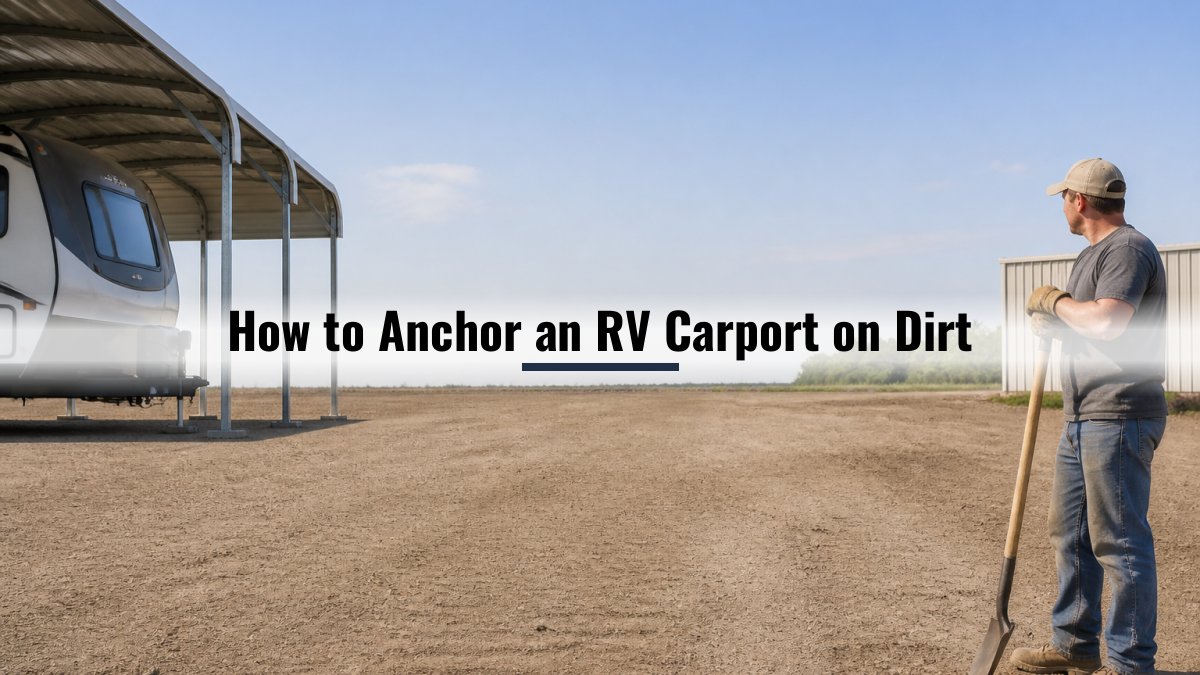
How to Anchor an RV Carport on Dirt
Last Updated: October 26, 2026
Quick Summary
To anchor an RV carport on dirt, dig holes at each leg to the anchor maker's required depth, set auger or drive-in anchors flush with the soil, square and level the frame, then tighten all hardware and backfill with compacted gravel. Match the anchor type to your soil and local wind zone.
- Call 811 before you dig to flag underground utilities, and it's free.
- Auger anchors grip firm, compacted dirt but can spin in loose fill.
- Drive-in anchors suit hard ground but need enough soil depth to hold.
- In sandy soil, use longer augers with wider helical blades and packed gravel backfill.
- Skipping compaction lets anchors pull free, so pack gravel around each anchor.
Table of Contents
- What You'll Need Before You Anchor an RV Carport on Dirt
- How to Prepare Ground for RV Carport Installation
- RV Carport Ground Anchors: Types and How They Work
- Step-by-Step: How to Anchor an RV Carport on Dirt
- Carport Anchors for Sandy Soil: What Works and What Doesn't
- Metal Carport Wind Anchoring: Keeping Your Structure Grounded in High Winds
- Common Mistakes to Avoid When Anchoring on Dirt
- Get Your RV Carport Delivered and Installed
- Frequently Asked Questions
What You'll Need Before You Anchor an RV Carport on Dirt
Anchoring an RV carport on dirt starts with the right tools and a clear plan. Get these items together before you break ground:
- A post-hole digger or power auger
- A spirit level and a tape measure
- Crushed gravel and a hand tamper
- Ground anchors rated for your soil and wind zone
- A wrench set and work gloves
- Safety glasses and closed-toe boots
- Utility marking flags for buried lines
Call 811 before you dig (811 Before You Dig). It's free, and it flags underground utilities so you don't hit a gas or water line.
How to Prepare Ground for RV Carport Installation
Preparing the ground is the step most people rush. A level, compacted pad keeps the frame square and stops legs from sinking after the first heavy rain.
Clear the site of roots, rocks, and grass. Then level the footprint and compact the soil in thin layers. For a deeper walkthrough, see how to prepare ground for metal carport sites, step by step.
Good prep also means checking drainage. Water that pools under the frame softens the soil and loosens anchors over time. Slope the pad slightly so rain runs off.
RV Carport Ground Anchors: Types and How They Work
RV carport ground anchors hold the structure down against wind uplift, and the right type depends on your surface. Here's how the three main options compare:
| Anchor Type | Best Surface | How It Holds | Watch Out For |
|---|---|---|---|
| Auger anchors | Dirt, gravel | Screw into soil | Loose or sandy soil |
| Drive-in anchors | Dirt, hard ground | Driven with a rod | Shallow soil depth |
| Concrete footings | Concrete pads | Bolted to slab | Needs a poured base |
Auger Anchors
Auger anchors twist into the ground like a giant screw. They work well in firm, compacted dirt because the helical blade grips undisturbed soil. In loose fill, they can spin without biting.
Drive-In Anchors
Drive-in anchors are hammered straight down with a steel rod. They suit hard ground where augers struggle. The catch: they need enough soil depth to hold, and shallow bedrock limits how far they go.
Concrete Footings
Concrete footings are the strongest option when you have a poured pad. The carport legs bolt into anchors set in the slab. For a full breakdown of this method, see our guide on how to anchor a metal carport to concrete.
Step-by-Step: How to Anchor an RV Carport on Dirt
Here's the core process, from bare dirt to a secured frame.
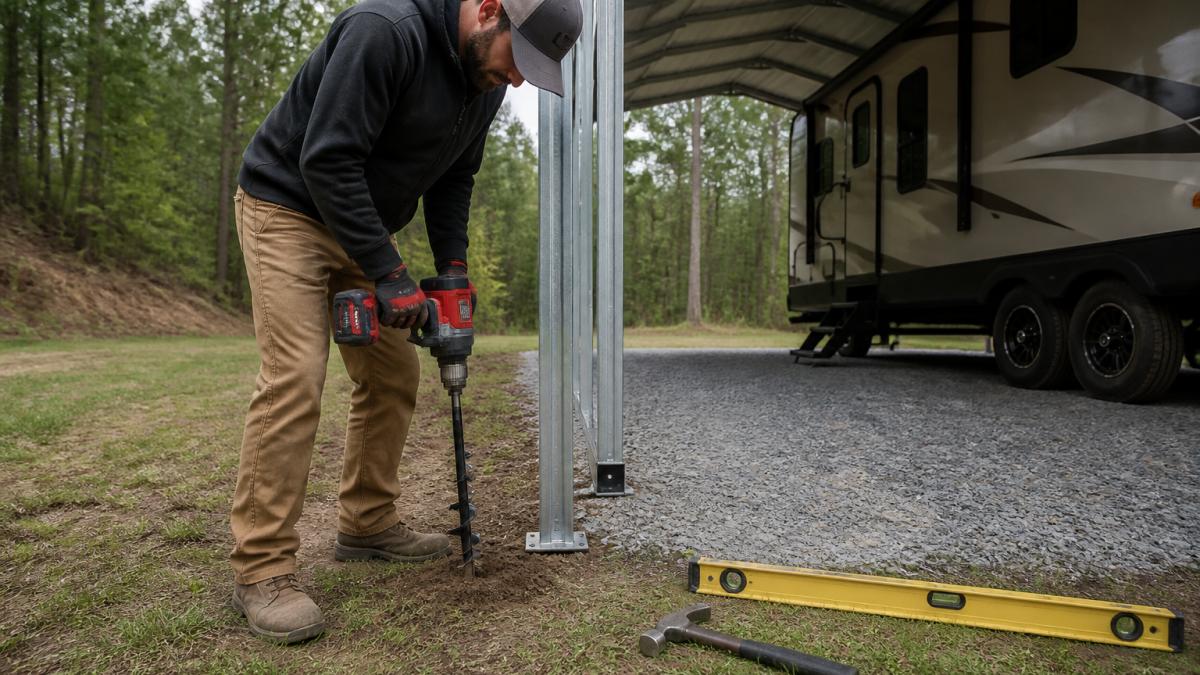
- Mark the leg positions. Measure the frame footprint and flag each corner.
- Dig or drill the holes. Bore to the anchor maker's required depth at each leg.
- Set the anchors. Twist or drive each anchor in until it sits flush with the soil.
- Square the frame. Check diagonals with a tape measure and adjust before tightening.
- Level each leg. Use the spirit level and shim as needed.
- Tighten all hardware. Snug the bolts, then recheck the level.
- Backfill and compact. Pack gravel around each anchor to lock it in place.
Expected result: A square, level frame with every anchor seated to full depth.
Carport Anchors for Sandy Soil: What Works and What Doesn't
Sandy soil is the hardest surface to anchor into. Sand shifts, drains fast, and gives anchors little to grip. Standard augers often pull loose under wind load.
- Longer auger anchors that reach deeper, firmer layers
- Wider helical blades that resist pull-out
- Gravel backfill packed tight around each anchor
Metal Carport Wind Anchoring: Keeping Your Structure Grounded in High Winds
Wind is what actually tests your anchors, and metal carport wind anchoring comes down to matching the anchor to your local wind zone. Uplift lifts the roof, and the anchors resist it.
Roof style matters too. Our guide on how to choose the right roof style for high wind areas explains which designs shed wind best. For structures that must meet local wind load rules, look at engineer certified metal carports built to your area's requirements.
Watch out: an anchor rated for calm inland air can fail in a coastal wind zone. Check your local wind load before you buy hardware.
Common Mistakes to Avoid When Anchoring on Dirt
Most anchoring problems come from a few repeat errors. Here are some common errors:
- Skipping compaction. Loose soil lets anchors pull free.
- Anchoring before squaring. A twisted frame stresses every joint.
- Using the wrong anchor for the soil. Sand and clay need different hardware.
- Ignoring wind load. Under-rated anchors fail in the first big storm.
- Skipping the 811 call. Hitting a buried line is dangerous and costly.
A common mistake is treating one anchor method as universal. The right choice depends on your ground and your structure.
Get Your RV Carport Delivered and Installed
Metal Carport Depot LLC delivers and installs engineer-certified steel structures with custom sizing at no extra charge, plus a 3D design tool that shows live state-specific pricing. You can pick your installation state to check availability and see pricing on screen.
Frequently Asked Questions
Can you anchor an RV carport directly to dirt?
Whether an RV carport can be anchored directly to dirt depends on the structure and site. Check with local building authorities about applicable requirements.
What anchors work best for a metal carport on dirt?
The appropriate anchoring method depends on the structure and site. Check with local building authorities about applicable requirements.
How deep should carport anchors go into the ground?
Anchor depth depends on the structure and site. Check local building requirements and the anchor manufacturer's specifications.
Do you need concrete footings for an RV carport?
Check with your local building department about foundation requirements for your site.
Anchoring an RV carport on dirt rewards patience and the right hardware. If you'd rather skip the guesswork, we handle delivery and professional installation so your structure is grounded correctly from day one. Our team offers galvanized steel framing, engineered drawings for permits, and financing options to fit your budget. Get started with Metal Carport Depot LLC and protect your RV with a structure built to hold. Call 1-800-324-5315.