 comparison
Heavy Duty Metal Carports for Sale: A 2026 Buyer's Guide
Table of Contents
- What Makes a Metal Carport Heavy Duty
- 12 Gauge vs 14 Gauge Steel Carports: Which Handles More
- Metal Carport Wind and Snow Load Ratings Explained
- Engineer Certified Metal Carports: Why Certification Matters
- Roof Styles and Customization Options for Your Space
- Permitting, Installation, and Delivery Considerations
- Maintenance and Longevity: Protecting Your Investment
- Choosing the Right Heavy Duty Metal Carport for Your Needs
- Frequently Asked Questions
Last Updated: September 3, 2026
Heavy-duty metal carports deliver real structural protection where standard canopies fail. If you're storing an RV, boat, or fleet of vehicles, the difference between 12-gauge and 14-gauge steel, paired with proper wind and snow load ratings, determines whether your investment survives the next storm intact.
This guide from Metal Carport Depot LLC breaks down what separates genuine heavy-duty metal carports from oversized garden sheds, how to read load ratings like an engineer, and why certification matters more than price tags.
What Makes a Metal Carport Heavy Duty
A heavy-duty metal carport isn't just thicker steel, it's a complete system engineered to handle specific environmental stresses. The frame gauge, roof pitch, anchor design, and bracing all work together to resist wind uplift, snow accumulation, and lateral forces that would collapse a lighter structure.
Genuine heavy-duty carports use galvanized steel framing that resists corrosion in humid or coastal climates. The tubular frame design distributes loads more evenly than box-beam alternatives, reducing stress concentration at joints. Boxed eave construction adds structural rigidity while creating a finished appearance that boosts property aesthetics.
Most importantly, heavy-duty carports come with engineer-certified designs specific to your location. This means the structure is rated for YOUR local wind speeds and snow loads, not a generic one-size-fits-all spec. A carport certified for 120 mph winds in Florida won't meet code in Colorado, where snow load demands are entirely different.
12 Gauge vs 14 Gauge Steel Carports: Which Handles More
The gauge number indicates steel thickness, lower numbers mean thicker material. A 12-gauge carport uses steel that's approximately 0.105 inches thick, while 14-gauge is around 0.075 inches (astm.org). That 0.03-inch difference translates to roughly 40% more structural capacity.
For heavy-duty applications, 12-gauge steel handles greater span distances without intermediate support posts. If you need a 20-foot-wide opening to park two large vehicles side-by-side, 12-gauge delivers that without sagging. 14-gauge works for smaller footprints or applications where additional support posts are acceptable.
The real decision hinges on your specific use case. A 12-gauge carport costs more upfront but eliminates the need for center posts that eat into usable parking space. 14-gauge carports are lighter, easier to transport, and sufficient for RVs or boats that don't require maximum span coverage.
Wind and snow loads drive the gauge requirement more than aesthetic preference. A structure rated for 150 mph winds typically demands 12-gauge steel, while moderate-climate carports with lighter load ratings can perform adequately in 14-gauge.
Metal Carport Wind and Snow Load Ratings Explained
Wind and snow load ratings aren't marketing language, they're engineering specifications that determine whether your carport stands or fails. Wind ratings measure how much horizontal force the structure can withstand, expressed in miles per hour. Snow loads measure vertical weight capacity, typically shown in pounds per square foot.
A carport rated for 120 mph wind load can resist sustained winds at that speed without structural failure (fema.gov). Snow load ratings work similarly: a 40 psf (pounds per square foot) rating means the roof can support 40 pounds of accumulated snow per square foot of surface area. In heavy snow regions, this difference between 30 psf and 50 psf ratings determines whether snow slides off safely or creates dangerous ice dams.
These ratings aren't universal. The same carport model requires different specs in different locations based on local building codes. A structure in Miami faces different wind demands than one in Denver, where altitude and snow load dominate. This is why state-specific pricing and engineering matter, your carport must match YOUR climate, not some national average.
Engineer Certified Metal Carports: Why Certification Matters
Engineer certification means a licensed structural engineer has analyzed the design, confirmed load calculations, and signed off on structural integrity. This certification isn't optional in most jurisdictions, building departments require it before issuing permits.
Certified designs come with engineered drawings that show every connection detail, anchor point, and load path. When an inspector arrives, you hand them documents proving the structure meets code. Without certification, you're building on assumptions, and inspectors can demand removal or expensive modifications mid-construction.
Certification also protects you legally. If the structure fails and causes property damage, you have documented proof that it was designed and installed to code specifications. Uncertified carports leave you exposed to liability if anything goes wrong.
Metal Carport Depot LLC provides engineer-certified designs specific to your location and wind/snow load requirements. This removes guesswork from the permitting process and ensures your investment meets local building standards.
Foundation and Anchoring Requirements for Long-Term Durability
The carport frame is only as strong as its connection to the ground. Proper anchoring prevents wind uplift, lateral shifting, and structural failure during storms. The anchor system must transfer all forces from the frame into the foundation without allowing movement.
Foundation requirements depend on soil type, frost depth, and local building codes. In regions with deep frost lines, footings must extend below the frost depth to prevent heaving that destabilizes the structure (fema.gov). Sandy soils require deeper footings than clay-based soils because they provide less bearing capacity.
Most heavy-duty carports use concrete footings with embedded anchor bolts. The bolts extend into the concrete at least 12-18 inches, creating a mechanical connection that resists uplift forces. Post bases then bolt to these anchors, transferring all structural loads into the foundation.
Site preparation is critical. The ground must be compacted, leveled, and properly graded to prevent water pooling around footings. Poor drainage accelerates concrete deterioration and weakens anchor connections over time.
Roof Styles and Customization Options for Your Space
Metal carport roofs come in three primary styles, each offering different benefits for weather protection and aesthetics. The choice affects water drainage, snow shedding, structural efficiency, and visual appeal.
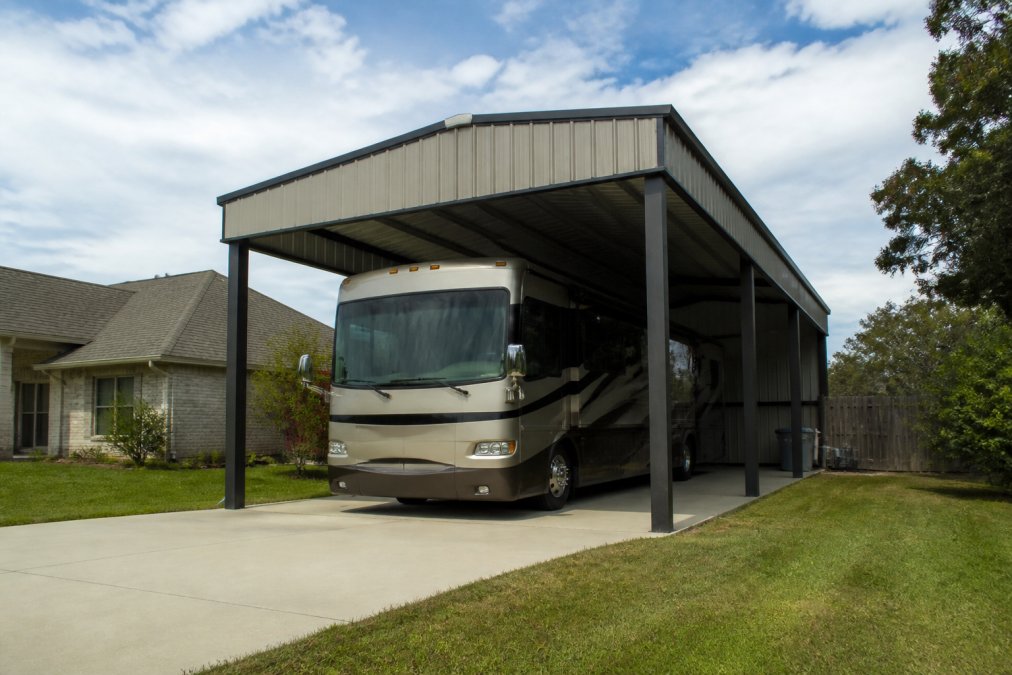
Regular gable roofs feature two sloped panels meeting at a peak, creating the classic A-frame appearance. This design sheds water and snow effectively because the slope encourages debris to slide off rather than accumulate. Gable roofs work well in areas with moderate precipitation.
Boxed eave designs add a horizontal ledge that extends beyond the sloped roof panels, creating a finished perimeter. This style improves aesthetics and adds weather protection by extending coverage beyond the post line. The boxed eave also provides a cleaner look that complements residential properties.
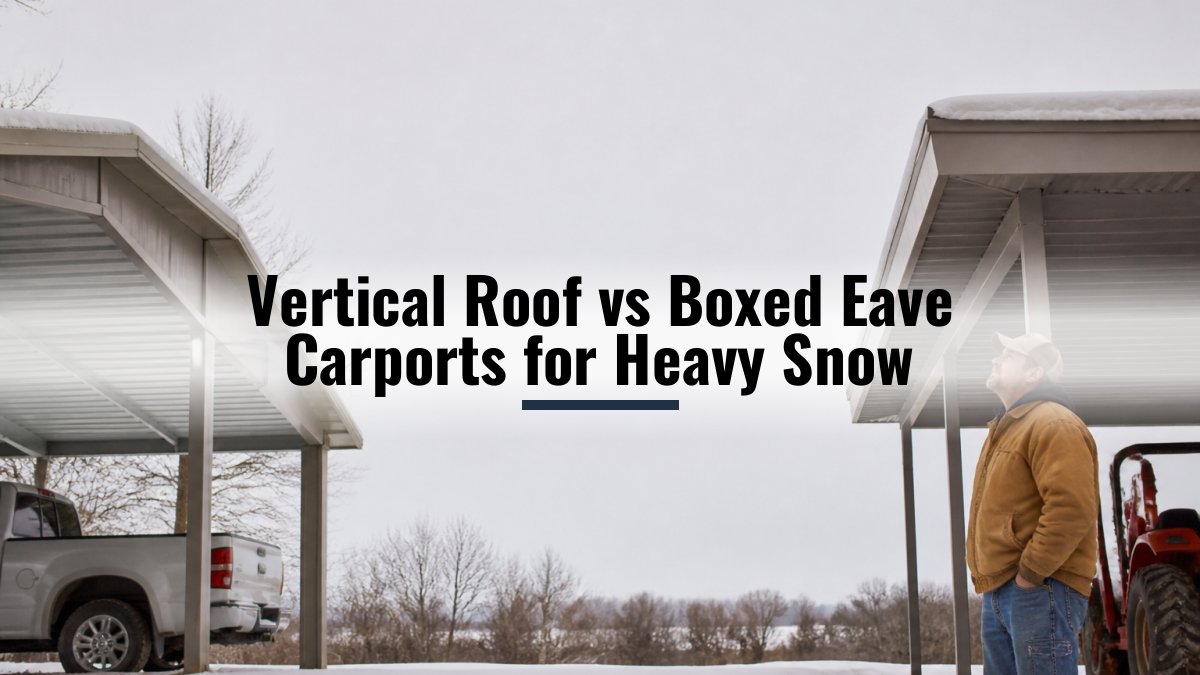
Vertical roofs feature panels that run perpendicular to the ground, creating a squared-off appearance. This design excels in heavy snow regions because it sheds snow more aggressively than sloped roofs. Vertical roofs also maximize usable height inside the structure, beneficial for storing tall equipment or RVs.
Customization extends beyond roof style. Width, length, and sidewall height can be adjusted to fit your specific space and storage needs. A custom carport built to your exact dimensions eliminates wasted space and maximizes usable coverage.
Boxed Eave vs Vertical Roof: Structural and Weather Benefits
Boxed eave and vertical roof designs represent fundamentally different approaches to weather protection and structural performance. Understanding the tradeoffs helps you choose the design that matches your climate and use case. durable pergola kits.
Boxed eave roofs feature sloped panels with a horizontal extension around the perimeter. This design provides moderate weather protection and a finished appearance. The slope encourages water and light snow to slide off, while the boxed eave prevents rain from blowing sideways under the roof line. Boxed eaves work well in regions with moderate wind and snow loads.
Vertical roofs eliminate the slope entirely, running panels straight up from the ground. This design excels in heavy snow regions because the vertical orientation allows snow to shed more aggressively. Wind pressure acts differently on vertical surfaces than sloped roofs, sometimes providing superior performance in extreme wind events. Vertical roofs also maximize interior height, a significant advantage for storing tall equipment.
The structural implications differ too. Vertical roofs experience different load distribution patterns than sloped designs, requiring different bracing strategies. Both styles can be engineered for equivalent load ratings, but the frame configuration changes based on roof design.
Choose boxed eave if you prioritize aesthetics and moderate weather protection. Choose vertical roof if you live in a heavy snow region or need maximum interior clearance height.
Permitting, Installation, and Delivery Considerations
Building permits aren't bureaucratic obstacles, they're your protection. Permitted structures get inspected by professionals who verify code compliance. Unpermitted structures can become liabilities when selling your property or filing insurance claims.
Most jurisdictions require permits for permanent structures like metal carports. The permit process involves submitting engineered drawings, paying a fee, and scheduling inspections at key construction phases. With proper documentation and certified designs, the permitting process typically moves quickly.
Building Permits and Zoning Compliance
Zoning regulations govern what structures you can build, where they can be located, and how close they can sit to property lines. Some jurisdictions classify carports as accessory structures with relaxed requirements, while others treat them as principal buildings with stricter setback rules.
Setback requirements typically specify minimum distances from property lines. A carport might need to sit 10 feet from the front property line and 5 feet from side lines. Height restrictions also apply, many jurisdictions limit accessory structures to 15 or 20 feet tall, though carports typically fall well below these limits.
Before ordering, verify your local zoning requirements. Many jurisdictions post zoning maps and regulations online. If you're unsure, contact your local building department, they'll clarify what permits you need and what restrictions apply to your property.
Metal Carport Depot LLC provides engineered drawings that include all necessary dimensions and specifications for permit applications. These certified designs simplify the permitting process because they already meet structural code requirements.
Maintenance and Longevity: Protecting Your Investment
Galvanized steel carports resist corrosion through a zinc coating that sacrifices itself to protect the underlying steel. This passive protection system works for decades with minimal maintenance. However, proper care extends the lifespan significantly.
Annual inspections catch problems early. Check for rust spots, especially where the zinc coating has been scratched or abraded. Powder-coated finishes add an extra protection layer that resists UV damage and weathering. If you notice coating damage, touch-up paint prevents rust from spreading.
Debris accumulation accelerates deterioration. Leaves, dirt, and organic matter trap moisture against steel surfaces, accelerating corrosion. Clearing debris from the roof and gutters annually prevents this moisture trap. In regions with heavy salt air exposure, periodic rinsing with fresh water removes salt deposits that promote corrosion.
The bolted connections deserve attention too. Over time, vibration from wind and temperature cycling can loosen bolts. An annual inspection with a wrench tightens any loose fasteners, preventing structural issues before they develop.
Properly maintained heavy-duty metal carports easily last 20-30 years or longer. The galvanized steel frame and engineered design mean you're investing in long-term property protection, not a temporary solution.
Choosing the Right Heavy Duty Metal Carport for Your Needs
Your decision hinges on four factors: climate requirements, available space, budget constraints, and future flexibility.
Start with your local wind and snow load specifications. Contact your building department or check online resources to determine what ratings your structure must meet. This single specification eliminates unsuitable options and ensures code compliance from the start.
Next, measure your available space precisely. Note the width and length you need, plus the sidewall height required for your stored items. A carport that's too small defeats the purpose, while oversized structures waste money and space. Custom sizing eliminates this guesswork.
Consider your timeline. Some providers offer quick delivery from existing inventory, while others build custom structures to order. If you need coverage immediately, inventory availability matters. If you can wait, custom builds ensure exact specifications.
Finally, evaluate installation support. Professional installation ensures proper foundation preparation, anchor system setup, and structural integrity. Metal Carport Depot LLC includes professional installation across 37 states, eliminating the complexity of coordinating contractors and ensuring your structure is installed correctly.
| Consideration | Impact | Action |
|---|---|---|
| Wind and snow loads | Determines gauge and frame specs | Check local building codes |
| Available space | Limits carport dimensions | Measure precisely before ordering |
| Roof style preference | Affects aesthetics and weather protection | Choose based on climate and appearance goals |
| Installation support | Ensures proper setup and code compliance | Prioritize providers offering professional installation |
| Timeline | Affects delivery speed | Balance custom specifications against delivery urgency |
Frequently Asked Questions
What gauge steel is considered heavy duty for a metal carport?
Heavy duty metal carports typically use 12 gauge or thicker steel for the frame and primary structural components. 12 gauge steel is significantly stronger than 14 gauge and can handle greater snow and wind loads. The gauge you need depends on your local climate, roof pitch, and the span width. Metal Carport Depot LLC uses engineer-certified designs that specify the exact gauge required for your area's wind and snow load requirements, ensuring your structure meets or exceeds local building codes.
Do heavy duty metal carports require a concrete foundation?
Yes, a proper concrete foundation is essential for structural integrity and longevity. The foundation anchors the carport securely to the ground and prevents shifting or movement from wind, snow load, or soil settling. Foundation depth and specifications depend on your soil type, frost line depth, and local building codes. Metal Carport Depot LLC provides engineered drawings that specify exact foundation requirements for your location, and professional installation ensures the foundation meets all code requirements for your area.
How do engineer-certified carports differ from standard kits?
Engineer-certified metal carports are designed and stamped by licensed engineers to meet or exceed local building codes and withstand specific wind and snow loads in your region. Standard kits typically use generic designs that don't account for your area's unique climate conditions. Engineer-certified carports come with structural drawings that satisfy building inspectors and ensure your structure is safe and compliant. This certification also protects your investment by guaranteeing the carport will perform as designed in your specific climate.
What maintenance is required to keep a heavy duty metal carport in top condition?
Regular maintenance extends the life of your metal carport significantly. Inspect the structure twice yearly for debris accumulation, especially in gutters and roof valleys. Clean the galvanized steel frame with mild soap and water to remove dirt and salt buildup, particularly in coastal areas. Check fasteners and bolts annually and tighten any that have loosened. Remove standing water or snow promptly to prevent corrosion and structural stress. Most galvanized steel carports require minimal maintenance beyond these basic steps, making them a durable, long-term storage solution.
Are heavy duty metal carports resistant to high wind and snow loads?
Yes, heavy duty metal carports are specifically engineered to resist high wind and snow loads when properly designed for your location. Wind and snow load ratings vary by region based on local climate data. Engineer-certified designs account for your area's maximum expected snow accumulation, wind speed, and ice load. Metal Carport Depot LLC uses state-specific engineering to ensure your carport meets local requirements. The 3D design tool provides instant, state-specific pricing and confirms your structure is certified for your area's conditions.
Choosing a heavy-duty metal carport means protecting your vehicles, RV, boat, or equipment with a structure engineered for your specific climate and built to last decades. Metal Carport Depot LLC simplifies this process with engineer-certified designs specific to your location, custom sizing at no extra charge, and professional installation included. Call 1-800-324-5315 to discuss your project requirements and get an instant quote using our 3D design tool.
This article was written using GrandRanker