 comparison
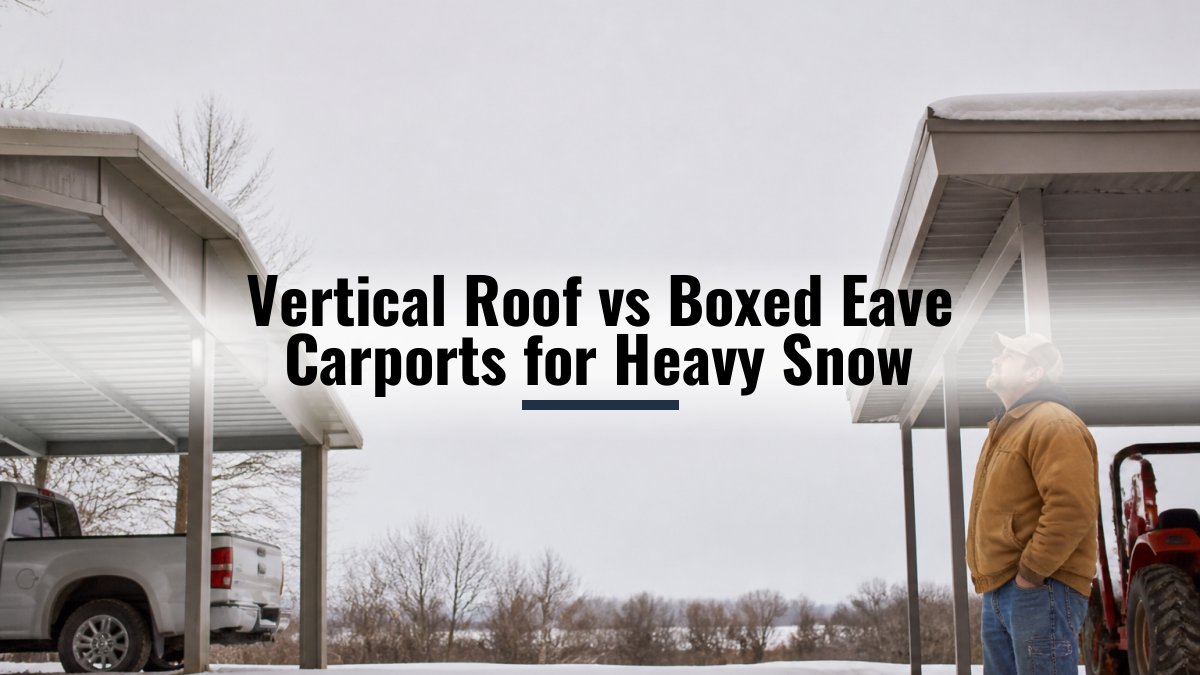
Vertical Roof vs Boxed Eave Carports for Heavy Snow
Table of Contents
- Vertical Roof vs Boxed Eave Carports for Heavy Snow: Key Differences
- Metal Carport Snow Load Rating: What the PSF Number Tells You
- Carport Roof Pitch for Snow: Why Steepness Matters
- Structural Factors Beyond Roof Style: Frame, Bracing, and Anchoring
- Engineered Metal Carports for Snow: Certification and Local Code
- How to Prevent Snow Buildup on a Metal Carport
- Which Roof Style Should You Choose for Heavy Snow?
- Conclusion
- Frequently Asked Questions
Last Updated: October 18, 2026
Vertical Roof vs Boxed Eave Carports for Heavy Snow: Key Differences
If you are weighing vertical roof vs boxed eave carports for heavy snow regions, the short answer is this: a vertical roof sheds snow more reliably, but roof style alone never determines whether a structure survives a hard winter. At Metal Carport Depot LLC, we build engineer-certified steel structures, and we tell customers the same thing every season: the roof panel direction matters, the PSF rating matters more, and the anchoring matters most of all.
Here is the part most buyers get wrong. They assume a vertical roof automatically means "snow-proof." It does not. A vertical roof is a better snow-shedding design, but a boxed-eave carport built to a higher snow load can outperform a vertical roof built to a lower one. Below, we break down how each roof style behaves under load, how to read a snow-load rating, and how to choose with confidence.
How Vertical Panels Shed Snow and Rain
Vertical roof panels run from the peak down to the eave, so gravity does most of the work. Snow and rain travel down a continuous channel with no horizontal seam in the way. Industry roof-style guides, including Metal America's carport roof style overview, describe vertical panels as allowing water and snow to slide off rather than collect. Fewer horizontal ledges also means less debris catch, which matters when wind drives leaves and ice against the roof.
Where Boxed-Eave Roofs Trap Snow and Debris
Boxed-eave carports have panels that run horizontally, with a finished trim box hiding the eave edge. That trim gives a cleaner, more traditional appearance, and it is a legitimate reason many buyers prefer it. The trade-off is real, though. Horizontal seams and the boxed edge create small ledges where snow can settle and refreeze. Coast-to-Coast Carports' roof style comparison draws the same contrast, noting snow may accumulate along horizontal seams where it would slide off a vertical panel.
A common mistake is buying a boxed-eave roof for a snow-prone site purely on looks, then discovering the seams hold ice. If curb appeal is your priority and your snow loads are modest, boxed eave is fine. If you get repeated heavy snow, vertical is the safer default.
Metal Carport Snow Load Rating: What the PSF Number Tells You
A snow load rating is the amount of snow weight, measured in pounds per square foot (PSF), that a structure is engineered to carry. That number, not the roof style, is the real measure of winter readiness.
The number most buyers never hear is the difference between ground snow load and roof snow load. Ground snow load is the weight of snow on the ground at your site, and it is the starting point building departments use.
How do you use the number? Compare the structure's PSF rating against the design snow load for your site, which your local building department sets. Your required PSF depends on your elevation, exposure, and roof geometry, so it varies from one property to the next.
Verifying a rating takes three documents, not a sales claim. First, ask for the engineered drawings or calculation package that states the design snow load the structure was checked against. Second, confirm the drawings are sealed by a licensed engineer and that the snow load shown matches or exceeds your local requirement.
Carport Roof Pitch for Snow: Why Steepness Matters
Roof pitch is the angle of the roof, and steeper pitches shed snow faster because gravity pulls the load down the slope more aggressively. A shallow roof lets snow sit and pile up; a steeper one encourages it to slide. This is why carport roof pitch for snow deserves as much attention as panel direction.
Vertical roofs are typically built at steeper angles, and our own roof styles guide for heavy snow notes vertical roofs commonly handle angles of 45 degrees or more. A steeper pitch paired with vertical panels gives snow the cleanest path off the roof. A shallow boxed-eave roof, by contrast, gives snow more time to settle and refreeze into a heavier mass.
Structural Factors Beyond Roof Style: Frame, Bracing, and Anchoring
The frame carries the load, and the anchoring keeps the frame standing. Galvanized steel framing, adequate frame spacing, diagonal bracing, and proper anchoring to the ground or slab all determine how a carport performs under snow and wind. A vertical roof on a lightly braced frame is still a lightly braced frame.
Frame spacing is the distance between the steel arches or trusses that support the roof. Closer spacing shortens the span each roof panel must carry and generally raises the load the structure can handle, while wider spacing saves steel and lowers cost.
Bracing is what keeps the frame from twisting or racking when snow loads one side more than the other. Diagonal bracing in the roof and walls, along with the connection details at the peak and eave, transfers uneven loads through the structure instead of letting one bay take the whole hit.
Anchoring is the last link in the chain and the one most often overlooked. A carport anchored to a concrete slab with proper anchors, or to the ground with certified anchors and footings, resists uplift and sliding.
A common pattern is that buyers compare roof styles and stop there, while the structures that fail in hard winters are often the ones where spacing, gauge, bracing, or anchoring was never checked against the local load. Match the roof style to your snow conditions, then confirm the structure behind it was engineered for the same load.
Engineered Metal Carports for Snow: Certification and Local Code
Engineered metal carports for snow are structures designed and documented to meet a specific snow load, not a one-size-fits-all product. Certification means the design has been reviewed against the loads your area requires, and the paperwork proves it. Local building code governs what your structure must meet, and requirements change by jurisdiction.
This is where a company that builds to local requirements earns its keep. Metal Carport Depot LLC structures are certified for local wind and snow loads, and we provide engineered drawings for building permits. Our 3D design tool shows state-specific pricing and configurations so you can match a structure to your site's requirements before you order.
| Roof Style | Snow Shedding | Debris Catch | Appearance | Best For |
|---|---|---|---|---|
| Vertical | Strong, panels run peak to eave | Low, few horizontal ledges | Utilitarian | Heavy, repeated snow |
| Boxed eave | Moderate, seams can hold snow | Higher, ledges catch debris | Traditional, finished trim | Modest snow, curb appeal |
| A-frame | Moderate, depends on pitch | Moderate | Classic peak | Light snow, general cover |
How to Prevent Snow Buildup on a Metal Carport
You cannot stop snow from falling, but you can keep it from overwhelming the roof. Preventing snow buildup on a metal carport comes down to design, monitoring, and safe removal.
- Confirm your structure's PSF rating meets your local design snow load
- Choose a steeper pitch and vertical panels where snow is frequent
- Clear snow before it refreezes into a heavier, denser mass
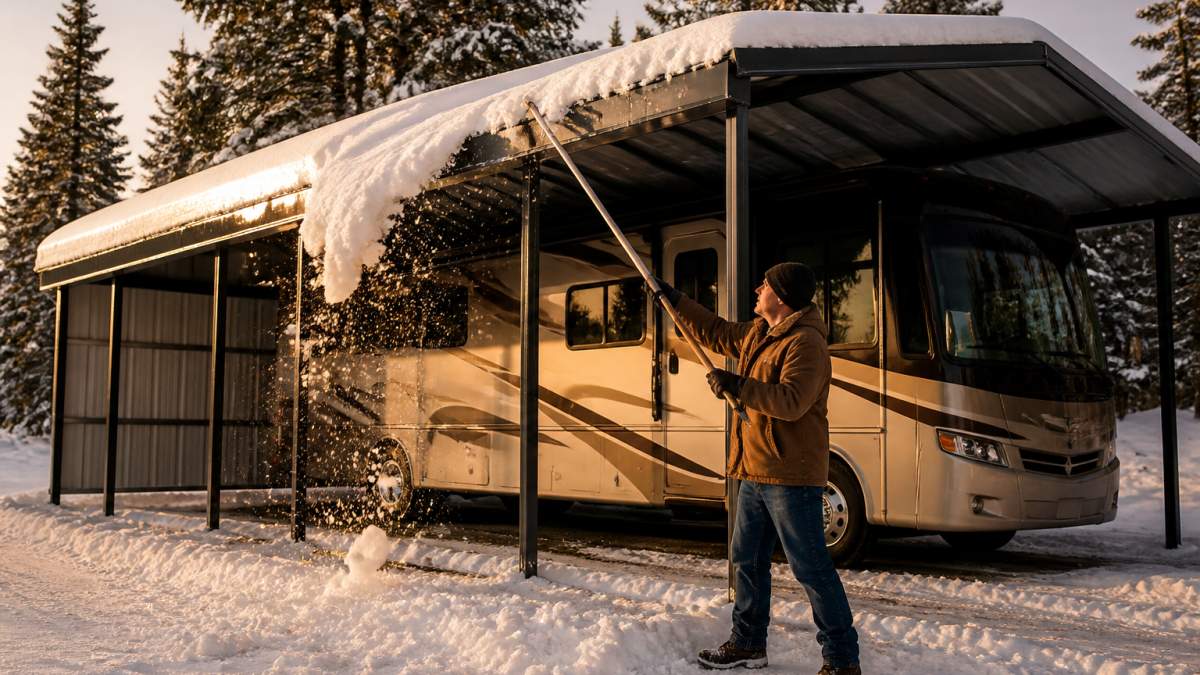
- Use a soft roof rake from the ground, never climb a snow-covered roof
- Watch for sagging panels, bent trim, or creaking as overload warning signs
- Keep gutters and the ground at the eave clear so meltwater drains away
Wet snow is heavier than dry powder, and freeze-thaw cycles turn a light layer into dense ice. Clear early and often rather than waiting for a big storm to pass.
Which Roof Style Should You Choose for Heavy Snow?
For heavy snow, choose a vertical roof with a steep pitch, a PSF rating that meets your local design snow load, and a well-braced, properly anchored frame. Vertical panels shed snow and rain more reliably, and the steeper pitch helps the load slide off before it settles.
Choose a boxed-eave roof when your snow loads are modest and you want the traditional finished look. It is a sound choice for lighter snow and for buyers who value appearance over maximum shedding. What you should not do is pick a roof style in isolation. Match the panel direction to your snow conditions, then confirm the rating, pitch, and structure behind it.
Conclusion
Sorting out vertical roof vs boxed eave carports for heavy snow regions comes down to matching the roof to your actual conditions, then backing it with a certified structure. Metal Carport Depot LLC builds engineer-certified steel carports and RV covers with galvanized steel framing, certified for local wind and snow loads, delivered and professionally installed at no extra charge within our service area. Our 3D design tool gives you instant, state-specific pricing, and engineered drawings are available for your permit. Call 1-800-324-5315 to configure a structure that stands up to your winters.
Frequently Asked Questions
Does a vertical roof carport shed snow better than a boxed eave roof?
Yes, a vertical roof generally sheds snow better than a boxed eave design. Vertical panels run from the peak to the eaves, so snow and water slide off instead of collecting along horizontal seams. Boxed-eave roofs have horizontal panels and trim that can trap snow and debris. That said, roof style alone does not determine capacity; the snow load rating, roof pitch, and structural framing all matter for heavy snow regions.
What snow load should a carport be rated for?
The right metal carport snow load rating depends on your local building code and the ground snow load for your area. Ground snow loads vary widely across the U.S., so there is no single number that works everywhere. Check with your local building department for the required design snow load, then confirm the carport's PSF rating meets or exceeds it. Engineered metal carports for snow come with drawings that document the rating for permitting.
How do you keep snow from building up on a metal carport?
To prevent snow buildup on a metal carport, start with a steep roof pitch and vertical panels that encourage shedding. Keep the roof clear of debris that can catch snow. Use a roof rake with an extension handle from the ground to remove accumulation safely, and never walk on the roof. Watch for warning signs of overload, such as sagging panels, bent frame members, or doors that no longer close properly, and clear the snow before it becomes heavy.
What is the best roof pitch for a carport in snowy areas?
A steeper carport roof pitch for snow helps gravity move accumulation off the panels. Vertical roof designs typically handle steeper angles, which encourages shedding. A flatter pitch gives snow more time to sit and refreeze. When comparing options, ask for the actual pitch of the configuration you are considering and confirm it matches the snow load rating for your area.
Does roof style determine how much snow a carport can support?
No. Roof style affects how snow sheds, but the load a carport can support depends on the structural frame, frame spacing, bracing, anchoring, and the PSF rating the structure is engineered for. A vertical roof on a light frame may carry less snow than a boxed-eave roof on a heavier, certified frame. Always check the snow-load certification and engineered drawings rather than assuming a roof style guarantees capacity.