 ultimate-guide
Metal Building Warranty: What Is Covered in 2026
Table of Contents
- What a Metal Building Warranty Typically Covers
- What Voids a Metal Building Warranty
- Paint, Finish, and Weathertightness Protection
- Metal Building Maintenance Requirements to Keep Coverage Valid
- How to File a Metal Building Warranty Claim
- Warranty vs. Insurance: Key Differences
- Transferability and Regional Climate Considerations
- Frequently Asked Questions
Last Updated: September 29, 2026
What a Metal Building Warranty Typically Covers
A metal building warranty is a written guarantee from a manufacturer or builder covering specific defects in materials and workmanship for a set period after installation.
Understanding what a metal building warranty covers before you sign prevents expensive surprises. Most warranties split coverage into three buckets: structural components, finish and coating, and workmanship. Each has its own duration, exclusions, and claim process.
Structural defects on primary frame members are usually covered longest, rust-through and corrosion get mid-range protection, and paint or finish issues fall under shorter terms. Workmanship coverage depends entirely on who installed the structure.
FTC guidance on warranty disclosures requires that written warranties clearly state what's covered, what's excluded, and how to file a claim.
Structural Integrity and Primary Frame Members
Structural integrity coverage protects the load-bearing components: columns, rafters, and primary frame members. It's the most important part of any warranty because a frame failure isn't cosmetic, it's a safety issue.
Rust-Through and Corrosion Coverage
Rust-through coverage kicks in when corrosion causes an actual perforation in the steel panel or frame, not surface rust. Surface discoloration from environmental exposure is normal and rarely covered; a hole rusted through a panel is a different story.
What Voids a Metal Building Warranty
A metal building warranty becomes void when the owner or installer acts outside the manufacturer's terms. The three most common triggers: installation errors, unauthorized alterations, and neglect of required maintenance.
Installation Errors and Workmanship Exclusions
Workmanship coverage is separate from material coverage, and who installed the building determines whether it applies. Manufacturer warranties cover defects in the materials shipped; workmanship warranties cover mistakes during assembly, anchoring, and finishing.
Voiding Conditions: Neglect, Alterations, and Improper Use
Alterations are the fastest way to void coverage. Cutting into a frame member to run wiring, adding a lean-to without engineering approval, or modifying the anchoring system all fall outside the original design and release the manufacturer from liability on the affected components.
Paint, Finish, and Weathertightness Protection
Paint and finish warranties cover cracking, chipping, peeling, and fading of the factory-applied coating. These terms are shorter than structural coverage because finish performance depends on environmental exposure and how panels were handled during installation.
| Coverage Type | Typical Duration | What It Covers | Common Exclusions |
|---|---|---|---|
| Structural / frame | Longest term | Manufacturing defects in primary frame members | Overloading, alterations, foundation failure |
| Rust-through | Mid-range term | Perforation from corrosion | Surface rust, coating damage |
| Paint / finish | Shorter term | Cracking, chipping, peeling, fading | Scratches from installation, chemical exposure |
| Weathertightness | Varies by manufacturer | Leaks at seams, fasteners, trim | Punctures, improper sealing |
| Workmanship | Set by installer | Installation errors, anchoring, assembly | Owner-performed modifications |
Metal Building Maintenance Requirements to Keep Coverage Valid
Metal building maintenance requirements are the conditions you must meet to keep coverage active. Skip them, and a manufacturer can deny a claim even when the defect itself would otherwise qualify.
How to File a Metal Building Warranty Claim
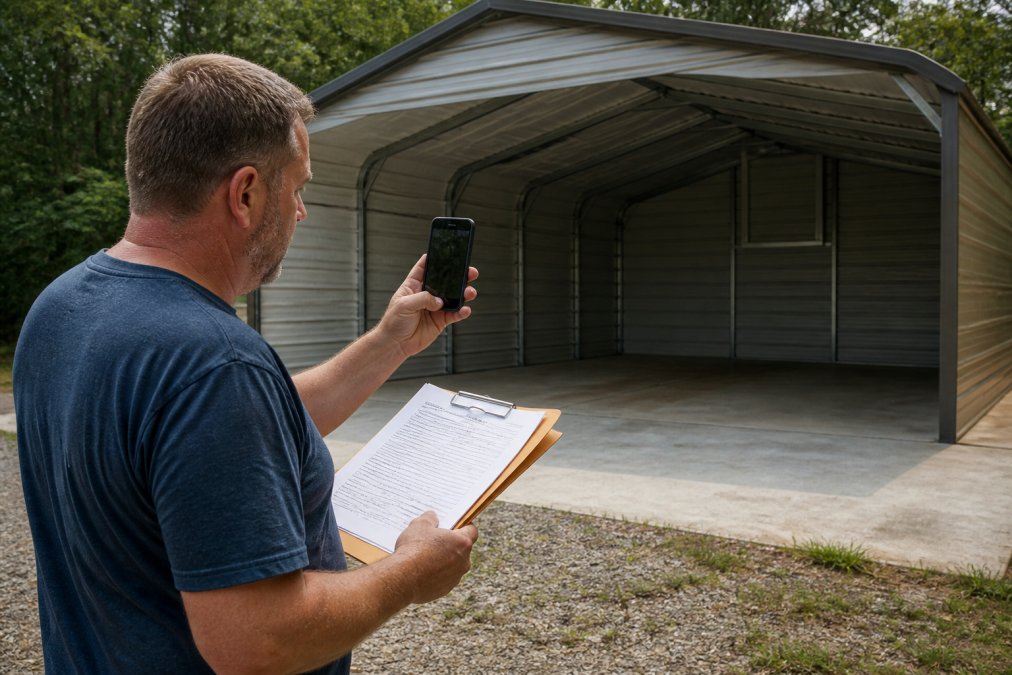
Filing a metal building warranty claim starts with documenting the defect in writing and photos, then submitting it to the warrantor within the timeframe their terms specify. Most claims are denied for late reporting, missing documentation, or submitting to the wrong party, the manufacturer instead of the installer, or vice versa.
The Documentation Checklist Most Buyers Skip
Assemble a claim file before you ever need one. Buyers who keep these records from day one resolve disputes in weeks instead of months:
- Original signed warranty document, including any riders or amendments
- Purchase agreement and invoice showing the building model, steel gauge, and coating spec
- Installation date and the installer's name, license number, and contact information
- Engineering drawings or stamped plans showing design wind and snow loads
- Photos taken at delivery and after installation, including close-ups of panel seams, fasteners, and the base
- Maintenance log with dates, tasks performed, and photos of each inspection
- Any written correspondence with the manufacturer or installer
Step-by-Step Claim Sequence
- Photograph the defect from multiple angles, including a wide shot showing its location on the building and a close-up with a tape measure or coin for scale
- Locate your original warranty document and note the claim deadline, which is often shorter than the coverage period itself
- Determine the correct warrantor: material defects go to the manufacturer, installation defects go to the installer
- Submit your claim in writing, not just by phone, and request a written acknowledgment of receipt
- Include your purchase date, installation date, and the relevant maintenance records
- Keep a copy of everything you send, including the date and method of delivery
Timelines and Response Expectations
Warranty terms typically require notice within a set window after discovery, often 30 days. Waiting until the end of a coverage period to report a problem you noticed months earlier is a common reason legitimate claims are denied. After submission, expect an inspection or photo review before a determination. If denied, ask for the denial in writing with the specific exclusion cited, that written denial is what you need to pursue the dispute further.
What Happens After You File
Most warrantors review the claim, may send an inspector or request photos, then issue a determination: repair, replacement of the affected component, or denial. Repair is most common for finish and weathertightness claims; replacement is more common for structural defects that can't be repaired to spec. Know before you file whether your warranty covers parts only, labor only, or both, a parts-only warranty still leaves you paying for the crew.
Warranty vs. Insurance: Key Differences
A warranty covers defects in materials and workmanship. Insurance covers damage from outside events like storms, fire, or vandalism. They are not interchangeable, and neither fills the gap left by the other.
Transferability and Regional Climate Considerations
Two warranty details rarely explained at the point of sale determine how much protection actually follows the building: whether the warranty transfers to a new owner, and whether the terms account for your local climate. Here's what they mean in practice.
Does the Warranty Stay With the Building When You Sell?
Transferability determines whether the warranty follows the building or dies with the original owner. Some manufacturers allow a one-time transfer, often with a written request within a set window after the sale and sometimes a transfer fee. Others don't allow transfer at all, meaning coverage ends the day the property changes hands.
To preserve transferability, the original owner usually must:
- Notify the manufacturer in writing within the transfer window, often 30 days of the sale
- Provide proof of the sale and the new owner's contact information
- Confirm that maintenance records are current and no unauthorized alterations were made
- Pay any transfer fee the terms specify
Why Regional Climate Changes What Your Warranty Covers
A structure engineered for local wind and snow loads performs differently than one built to a generic spec, and the warranty terms often reflect that. Coastal areas face salt exposure that accelerates corrosion. Northern regions face snow loads that stress the frame. Humid climates test every seal and coating. FEMA guidance on wind and snow load design explains how regional loads shape structural requirements.
- Does the corrosion coverage account for salt-air exposure, or is it written for inland conditions?
- Is the design snow load stamped for your county, or is it a generic figure?
- Does the finish warranty exclude fading or chalking in high-UV regions?
- Are wind ratings tied to your local code requirements, or to a national minimum?
Frequently Asked Questions
What voids a metal building warranty?
Common voiding conditions include improper installation by unqualified crews, unauthorized modifications or repairs, failure to perform required maintenance, using the structure for purposes it wasn't engineered for, and neglecting to address minor damage before it worsens. Most warranties also exclude damage from extreme weather events beyond the building's certified load ratings, vandalism, or accidents. Always review your specific warranty document because terms vary by manufacturer and structure type.
What is not covered under a typical metal building warranty?
Standard warranties exclude damage from storms exceeding certified wind or snow loads, earthquakes, fires, and floods. They also don't cover cosmetic issues like minor fading, surface rust that hasn't perforated the metal, or damage from improper maintenance. Labor costs for repairs, site preparation problems, and damage to personal property stored inside the building are also typically excluded. Insurance policies, not warranties, handle these types of losses.
How long does a rust-through warranty usually last?
Rust-through warranties on galvanized steel buildings commonly range from 10 to 25 years, depending on the coating thickness and manufacturer. These warranties cover perforation of the metal panel or frame due to corrosion, not surface rust or cosmetic discoloration. Coastal and humid climates may accelerate corrosion, so check whether your warranty includes environmental exposure limitations or requires additional protective coatings in those areas.
What documentation do I need to file a warranty claim?
Gather your original purchase agreement, warranty certificate, and any maintenance records showing you followed the required schedule. Take clear photos of the damage from multiple angles, including close-ups and wide shots showing the affected area in context. Note the date you first noticed the issue and any relevant weather events. Contact the manufacturer or dealer promptly, as most warranties require notification within a specific timeframe after discovering a defect.