 how-to
Metal Carport Maintenance and Cleaning Tips
Table of Contents
- Why Metal Carport Maintenance Matters
- How to Clean a Metal Carport Roof Safely
- Metal Carport Rust Prevention Strategies
- Removing Tough Stains and Outdoor Buildup
- Metal Carport Winter Maintenance Checklist
- Creating a Metal Carport Maintenance Checklist
- Inspection and Early Damage Detection
- Frequently Asked Questions
Last Updated: October 6, 2026
Why Metal Carport Maintenance Matters
A metal carport shields vehicles, equipment, and storage year-round, but sun, rain, snow, and salt air cause rust, fading paint, loose fasteners, and corrosion that becomes structural damage.
Regular metal carport maintenance prevents most of these problems: a simple cleaning routine and seasonal inspection catch issues early, when they're cheap to fix.
This guide covers metal carport maintenance and cleaning tips: safe cleaning, rust prevention, stain removal, and a year-round checklist. These practices apply to any manufacturer's carport.
How to Clean a Metal Carport Roof Safely
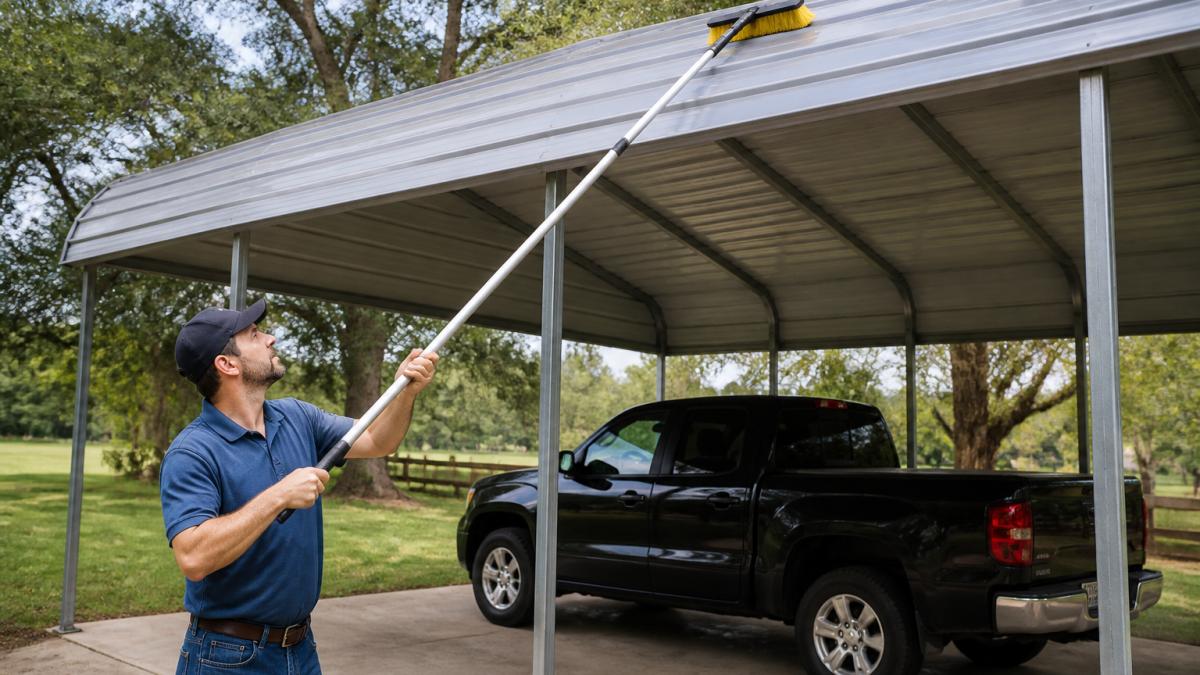
Cleaning a metal carport roof means removing dirt and debris without damaging the protective coating. Most damage comes from harsh tools or pressure washers that strip paint. Start with a visual inspection for leaves, branches, dirt, stains, rust spots, or worn coating.
Gathering Your Cleaning Tools and Materials
A few basic items work well for metal carport maintenance and cleaning:
- Soft-bristled brush or non-abrasive sponge
- Extension or telescopic pole (10-20 feet)
- Mild detergent or car wash soap
- Garden hose
- Soft cloth or chamois for drying
- Safety glasses and work gloves
- Bucket for mixing solution
Avoid pressure washers above 1,500 PSI, which strip coatings and force water into seams, and skip wire brushes, steel wool, and abrasive pads that accelerate rust.
Step-by-Step Roof Cleaning Process
Step 1: Clear loose debris (5-10 minutes)
Remove leaves, branches, and dirt by hand or with a soft brush so debris doesn't scratch the surface.
Step 2: Mix your cleaning solution (2 minutes)
Step 3: Wet the roof (5 minutes)
Spray the roof with a garden hose to loosen dirt and keep the solution from drying too fast on hot days.
Step 4: Apply cleaning solution (10-15 minutes)
Dip your soft brush or sponge into the solution and scrub gently in circular motions, working in small sections top to bottom.
Step 5: Rinse thoroughly (10 minutes)
Rinse each section completely from top to bottom so water flows downward. Soap residue traps moisture and promotes rust.
Step 6: Dry the surface (5-10 minutes)
Metal Carport Rust Prevention Strategies
Rust forms when iron in steel meets oxygen and moisture. Prevention is far easier than repair.
Apply protective coatings regularly. Most metal carports come with factory-applied paint or galvanized coating, your first line of defense.
Inspect fasteners and connections. Bolts, nuts, and welds trap water. Check them twice yearly, tighten loose bolts, and replace rusty fasteners with stainless steel.
Ensure proper ventilation. Air circulation reduces moisture underneath the carport; keep vents clear and vegetation away to keep the underside dry.
Removing Tough Stains and Outdoor Buildup
Some stains need targeted treatment beyond basic washing.
Rust stains: Orange or brown discoloration from surface iron oxidation. Use a rust stain remover per the product directions, most convert rust to a stable compound.
Mineral deposits: White or gray deposits from hard water and mineral-rich rain are harmless but unsightly.
Mold or mildew: In humid climates, mix one part white vinegar with three parts water, spray affected areas, let sit 10 minutes, scrub gently, and rinse.
Stubborn dirt and grime: Apply cleaning solution and let it sit 15-20 minutes to soften grime, then scrub gently with a soft brush; aggressive scrubbing damages the coating.
Metal Carport Winter Maintenance Checklist
Winter separates a carport that lasts decades from one that fails in a few years. Snow load, ice damming, road salt, and freeze-thaw cycles attack at once. The goal: keep weight off the roof, water moving off the surface, and salt off the coating.
Before the First Snow
- Clean the entire structure. Dirt and debris trap moisture and give salt and ice something to cling to.
- Inspect the roof for weak spots. Dents, oil-canning (wavy panels), loose seams, and worn coating are where snow load concentrates.
- Tighten every fastener you can reach. Cold contracts metal, so connections snug in July can loosen by January.
- Clear gutters and edge channels. A clogged channel is the number-one cause of ice dams.
- Trim overhanging branches. A limb that drops under snow load can puncture a panel.
- Touch up bare metal and scratches. Matching paint or rust-converter primer on exposed steel is cheap insurance.
Snow Load: What Actually Matters
Snow weight varies with moisture content: light, dry snow weighs roughly 5 to 10 pounds per cubic foot, while wet, heavy snow can exceed 20. A foot of wet snow on a 20-by-20-foot roof can add several tons. Most residential carports are engineered for a specific regional ground snow load, and exceeding it, even briefly, can bend panels, pull fasteners, or collapse the structure.
- Remove snow in layers, not all at once. Work from the ground with a roof rake in small passes.
- Never let snow sit for more than a few days. Repeated melt-and-refreeze turns powder into dense ice.
- Do not chip at ice with a metal tool. You'll scratch the coating and create a rust start point. Use a plastic scraper or let the sun work.
- Watch the eaves. Sliding snow can bury a vehicle or a person. Keep the area clear.
Ice Dams and Drainage
An ice dam forms when snow on the upper roof melts, runs to the colder eave, and refreezes, backing water up under the panels and into seams. To prevent them:
- Keep edge channels and gutters free of snow and debris all winter.
- After a storm, pull the bottom two to three feet of snow off the roof edge with a rake.
- If ice has formed, don't chop it. Fill a length of pantyhose with calcium chloride ice-melt and lay it vertically across the dam to melt a channel for water to escape.
Salt, Freeze-Thaw, and Coastal Air
Road salt is corrosive to painted and galvanized steel alike. If your carport sits near a treated road or within a few miles of the coast, salt spray settles on the panels and frame.
- Rinse the structure after every significant storm once temperatures are above freezing; a garden hose dilutes and washes away salt.
- Pay extra attention to the underside and base plates. Salt-laden slush splashes up and sits where panels meet the frame.
- Freeze-thaw cycles work on fasteners and seams. Water seeps into a joint, freezes, expands, and widens the gap, which is why a mid-winter fastener check matters.
Mid-Winter Check (Once a Month)
- Walk the perimeter for sagging panels, popped fasteners, or new rust streaks.
- Confirm drainage channels are clear.
- Rinse salt residue if weather allows.
- Note damage you can't fix in the cold and schedule it for the first warm day.
After the Thaw
- Rinse the entire structure top to bottom to remove salt and grit.
- Re-inspect for winter rust spots and touch them up before they spread.
- Re-tighten fasteners loosened by freeze-thaw cycling.
- Check the coating for chalking, flaking, or bare metal and plan a recoat if needed.
Creating a Metal Carport Maintenance Checklist
Print this checklist or save it to your phone.
| Maintenance Task | Frequency | Notes |
|---|---|---|
| Visual inspection for damage | Monthly | Look for rust, loose fasteners, coating wear |
| Clean roof and panels | Quarterly or after storms | Use soft brush and mild soap |
| Inspect fasteners and tighten | Twice yearly | Spring and fall |
| Check drainage and clear debris | Monthly | Prevent water pooling |
| Inspect for rust and touch up paint | Twice yearly | Address spots early |
| Deep cleaning and coating inspection | Annually | Spring is ideal |
| Winter-specific inspection | Before and after winter | Check for damage from snow/ice |
Monthly: Walk around the carport for visible damage, rust, or debris.
Quarterly: Clean the roof and panels using the method above.
Twice yearly (spring and fall): Tighten fasteners, inspect for rust, and touch up worn paint.
Annually: Do a thorough cleaning and inspect the protective coating; if it looks thin or damaged, plan a recoat.
Inspection and Early Damage Detection
Most carport problems announce themselves long before they become expensive. The skill is knowing which findings you can handle yourself and which mean it's time to call a professional. Here's a repeatable routine and a clear threshold for each type of damage.
How to Run an Inspection
Do this from the ground, you don't need to get on the roof to catch the vast majority of issues.
- Walk the full perimeter slowly, looking up at the underside of the roof panels and frame.
- Use binoculars to inspect the roof surface, seams, and ridge line without climbing.
- Check every visible fastener, base plate bolts, panel screws, and brace connections.
- Look at the ground around base plates for rust flakes, water staining, or soft soil suggesting poor drainage.
- Photograph anything suspicious to compare next month and see whether it's spreading.
What to Look For, and What It Means
Surface rust vs. structural rust. Orange or brown surface discoloration is cosmetic, treat it with rust converter and touch-up paint.
Loose or missing fasteners. A few loose bolts you can tighten yourself.
Coating failure. Chalking, fading, and small scratches are normal wear and can be recoated.
Water staining and leaks. Dark streaks on the underside of panels mean water is entering at a seam or fastener.
Bent, dented, or oil-canned panels. A small dent from a falling branch is cosmetic.
Base plate and anchor condition. Base plates take the most abuse where the carport meets the ground.
When to Call a Professional
Treat this as a hard line. If any of the following are true, stop and get a professional assessment:
- Rust has penetrated the metal or is visible inside a structural tube.
- A load-bearing member is bent, cracked, or pulled away from its connection.
- Base plate anchors are loose or corroded, or the concrete is cracked.
- Water enters along a full seam or the roof no longer drains properly.
- The structure has shifted, leans, or moves in high wind.
- You can't work safely at height.
A Simple Inspection Cadence
- Monthly: Perimeter walk, fastener glance, drainage check.
- Quarterly: Full binocular inspection, photo log, touch-up of new scratches.
- Twice yearly (spring and fall): Fastener torque check, coating assessment, base plate and anchor inspection.
- After any major storm: Full perimeter walk and roof-surface check from the ground.
Frequently Asked Questions
How often should you clean a metal carport?
Clean your metal carport at least twice yearly, spring and fall, to remove accumulated debris, pollen, and dirt. In humid or coastal areas, increase frequency to quarterly cleanings to prevent moisture buildup and rust formation. Inspect after severe weather events and clean immediately if you notice leaves, branches, or visible dirt accumulation on the roof panels.
What is the best cleaner for a metal carport without causing rust?
Use mild detergent mixed with water as your primary cleaning solution. Avoid acidic cleaners, harsh chemicals, or steel wool, which can damage the protective coating and accelerate rust. For tough stains, a soft-bristled brush with soap and water is sufficient. Always rinse thoroughly with clean water and allow the surface to dry completely to prevent moisture-related corrosion.
How do you remove rust from a metal carport?
For light rust spots, scrub gently with a soft-bristled brush and a mixture of mild detergent and water. Rinse thoroughly and dry immediately. For deeper rust, consult a professional, as aggressive removal methods can compromise the structural integrity and protective galvanized coating. Regular inspection helps catch rust early before it spreads.
What should you check during a metal carport inspection?
Inspect fasteners and connections for tightness, check metal panels for rust spots or corrosion, look for leaks or water damage inside, verify that gutters and drainage areas are clear, and examine the roof for dents or damage from weather. Document any issues and address minor problems promptly to prevent structural damage and extend the lifespan of your carport.