 how-to
How to Protect RV From Sun Damage: 7-Step Guide
Last Updated: October 23, 2026
Quick Summary
To learn how to protect RV from sun damage, build a routine that covers the roof, exterior, and storage: wash and inspect the roof membrane, reseal seams, and reapply a UV coating when the surface turns chalky. Wax or apply UV protectant to paint and decals, retract the awning when idle, and use a breathable cover or shade structure for storage.
- A chalky gray roof has lost its UV blockers and will crack faster.
- Clean and reseal seams before applying roof coating so the sealant bonds properly.
- Retract the awning whenever you leave camp or the sun gets intense.
- In high-UV areas, inspect the roof monthly during summer.
- If water is already getting in or the membrane is soft, get a professional inspection.
Table of Contents
- Why UV Rays Tear Up an RV (and What Fails First)
- How to Protect RV Roof From Sun Damage
- Choosing an RV Cover for Sun Protection
- How to Protect RV Awning From Sun Damage
- Exterior Care: Wax, UV Protectant, and Decals
- Covered RV Storage: When a Structure Beats a Tarp
- Seasonal Sun-Damage Maintenance Schedule
- Early Warning Signs and Repair Thresholds
- Frequently Asked Questions
Why UV Rays Tear Up an RV (and What Fails First)
Sunlight destroys an RV from the top down. The roof takes the full hit, then the damage spreads to sealants, decals, and paint.
Ultraviolet rays break down the chemical bonds in rubber, plastic, and paint. Heat speeds up the process.
What fails first? Almost always the roof membrane and the sealant at the seams.
So how to protect RV from sun damage without spending every weekend on maintenance?
How to Protect RV Roof From Sun Damage
Roof care is the highest-value habit you can build. The roof is the largest horizontal surface on the rig, so it collects the most sun and heat. A clean, coated membrane reflects more of that energy and lasts longer.
Cleaning and Inspecting the Membrane
Wash the roof with a mild cleaner and soft brush, then rinse well. Never use a pressure washer up close, it can force water past seams. Let the roof dry fully before coating.
Then inspect. Get on your hands and knees and look for:
- Chalky or powdery patches
- Hairline cracks near vents and seams
- Lifted or peeling sealant
- Soft spots that give underfoot
Check the roof at the start of every season and again mid-summer. A ten-minute look saves a major repair.
Sealants, Coatings, and Reapplication Timing
Clean and reseal seams, vents, and edges before applying any roof coating.
Match the product to your membrane. Rubber roofs and fiberglass roofs need different coatings, so read the label. Apply in thin, even coats and follow the maker's cure time.
Reapplication timing depends on climate and sun exposure. A common approach: inspect every spring and reapply when the surface looks chalky or water stops beading.
Choosing an RV Cover for Sun Protection
An RV cover blocks ultraviolet rays before they reach the roof and paint, but the wrong cover can trap moisture, scuff the finish, or tear in the wind. Match the cover to your storage situation and install it so it protects without causing new problems.
Cover Types and Their Trade-offs
Here is how the common options compare:
- Breathable fitted covers: Made from fabrics like polypropylene or Tyvek, these let moisture vapor escape while blocking most UV. They are the best choice for long-term outdoor storage because they reduce condensation and mold risk. However, they cost more than tarps and can still flap in high wind if not secured properly.
- Non-breathable tarps (poly or canvas): Cheap and water-resistant, but they trap moisture underneath, which can lead to mold, mildew, and rust. They also tend to scratch paint as they move in the wind. Use them only as temporary protection during a specific event, not for season-long storage.
- Shade structures (carports, fabric shade sails): These block direct sun while allowing full airflow, eliminating trapped moisture. They cost more upfront and require space, but they offer the best combination of UV protection and ventilation. A metal carport, for example, provides year-round shade without any cover to install or remove.
Safe Installation to Avoid Abrasion and Moisture
Even a good cover can damage an RV if installed poorly:
- Clean and dry the RV completely before covering. Dirt trapped under the cover acts like sandpaper as the fabric moves.
- Pad sharp edges like ladder ends, antenna bases, and awning arms with foam or cloth to prevent tears.
- Secure the cover snugly using all provided tie-downs and straps. A loose cover flaps and scuffs paint; a tight cover sheds wind better.
- Ensure ventilation by choosing a breathable fabric and, if possible, leaving a small gap at the bottom for air circulation.
- Check periodically, especially after storms, for loose straps, pooled water, or signs of moisture inside.
When to Choose a Cover vs. a Structure
A cover suits partial shade, seasonal protection, or a tight budget. A structure like a metal carport is better if you store at home year-round, face intense sun, or want zero recurring setup work.
| Factor | Breathable Cover | Non-Breathable Tarp | Shade Structure |
|---|---|---|---|
| UV blocking | Good | Good | Excellent |
| Moisture management | Good (breathable) | Poor (traps moisture) | Excellent (open airflow) |
| Abrasion risk | Low if fitted | High if loose | None |
| Upfront cost | Moderate | Low | High |
| Ongoing effort | Install/remove each use | Install/remove each use | None |
Consumer product safety guidance on outdoor covers and tie-downs
If your rig is wide, fit matters more than fabric. Our guide to the best metal carport for wide RV storage covers how width changes the whole protection plan.
How to Protect RV Awning From Sun Damage
The awning is fabric, and fabric fades fast in direct sun. A vinyl or acrylic awning left out all season loses color and grows brittle at the folds.
Roll the awning up whenever you leave camp or the sun gets intense.
Clean the awning a few times a season with mild soap and water.
Look for these early signs of sun damage:
- Faded or chalky color
- Stiff, brittle fabric at the folds
- Small pinholes or tears
- Mildew spots that will not wash out
Catch these early. A small tear is a patch job. A torn awning is a replacement.
Exterior Care: Wax, UV Protectant, and Decals
Paint and decals fade from the same ultraviolet rays that attack the roof.
Wash the rig first, then apply wax or a UV protectant to clean, dry paint. Follow the product directions for cure time.
For decals, use a protectant safe for vinyl.
A common mistake is skipping the sides and focusing only on the roof. The side facing the afternoon sun fades just as fast.
Covered RV Storage: When a Structure Beats a Tarp
A tarp is cheap and fast, but it is a stopgap. A permanent cover like a metal RV carport blocks sun, rain, and hail year-round with almost no upkeep.
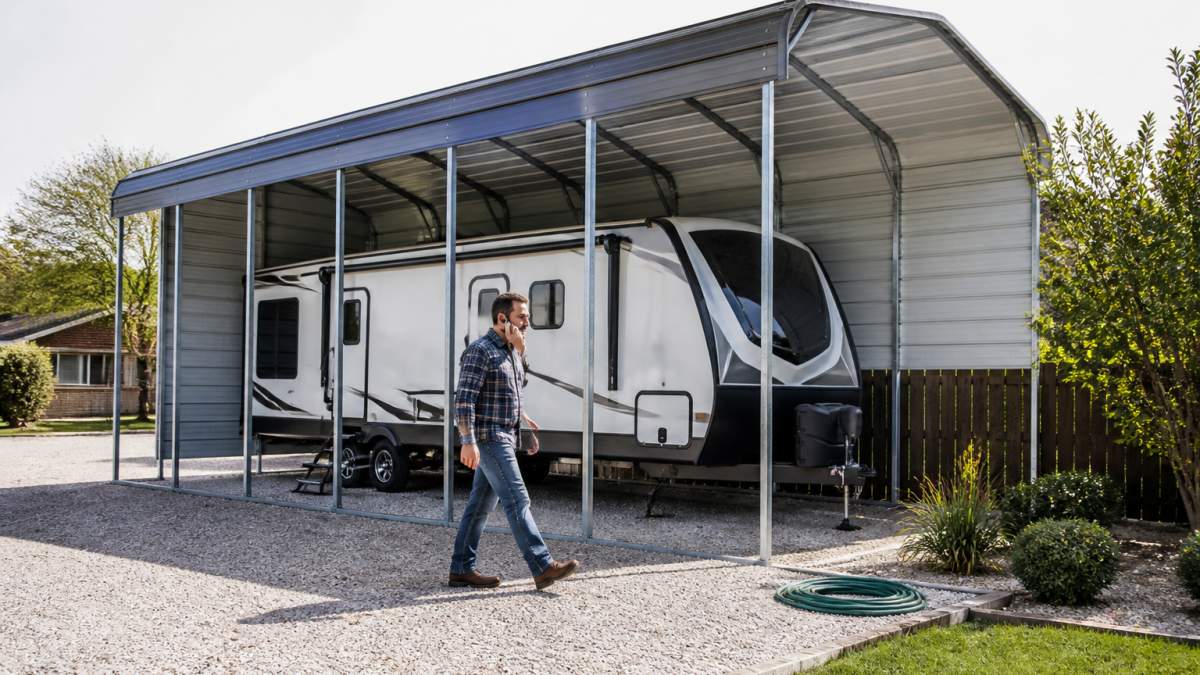
The honest trade-off: a tarp costs little up front but traps moisture, scuffs paint, and needs replacing. A carport costs more once but gives full-time shade and airflow.
At Metal Carport Depot LLC, we build custom-sized metal RV covers with galvanized steel framing, delivered and installed at no extra charge across 37 states. You can browse RV carport and metal cover options to see the lineup.
Before you commit to a structure, know what will fit. Our guide to carport dimensions for RV storage walks through sizing, and our look at alternatives to traditional RV storage units helps you compare options.
Seasonal Sun-Damage Maintenance Schedule
Knowing how to protect RV from sun damage varies with climate and exposure, so a one-size-fits-all schedule falls short. Use this framework to build a routine that matches your rig's environment.
Base Schedule for Moderate Sun Exposure
If your RV sees average sun (e.g., mixed shade, moderate latitudes), this quarterly routine keeps damage at bay:
| Season | Task | Frequency |
|---|---|---|
| Spring | Wash and inspect roof, reseal seams | Once at season start |
| Spring | Apply roof coating if chalky | As needed |
| Summer | Check awning fabric and retract when idle | Weekly |
| Summer | Reapply wax or UV protectant | Every 4-6 weeks |
| Fall | Clean and dry cover before storage | Once |
| Winter | Inspect sealants and touch up | Once mid-season |
Adjustments for Intense Sun and Hot Climates
In high-UV areas (e.g., the Southwest), increase frequency:
- Roof inspection: monthly during summer.
- Roof coating reapplication: every 12-18 months, or when water stops beading.
- Wax/UV protectant: every 3-4 weeks.
- Awning: retract whenever not in active use; consider a UV-blocking fabric treatment.
Adjustments for Long-Term Outdoor Storage
If the RV sits uncovered for months:
- Before storage: wash, dry, and apply a UV protectant to all exterior surfaces; condition seals.
- During storage: if using a cover, check monthly for moisture and tight straps; if uncovered, inspect roof and seams every 2-3 months.
- After storage: clean and reapply protectant before first trip.
Adjustments for Partial Shade
Shade reduces UV intensity but can increase moisture and debris. Focus on:
- Cleaning: remove leaves and dirt that trap moisture.
- Ventilation: ensure airflow to prevent mold.
- Sealant checks: shade slows drying, so inspect for cracks more often.
Keep a simple log of what you did and when. It takes a minute and tells you exactly when the next coat is due. Owners who track it stop guessing.
Our rust prevention and maintenance guide for metal carports covers the structure side of the same routine, since sun and weather wear the steel too.
Early Warning Signs and Repair Thresholds
Catching damage early is the whole game. Most expensive RV sun repairs start as a small crack or faded seam nobody checked.
Watch for:
- Chalky roof: clean and coat now.
- Cracked sealant at seams: reseal before water gets in.
- Faded or peeling decals: apply vinyl protectant; replace if cracked through.
- Stiff awning fabric: clean, treat, and consider replacement if it tears.
The threshold is simple. If a sealant crack is small and dry, reseal it yourself.
Sun damage is patient. It works a little every day until a small crack becomes a soaked ceiling.
Metal Carport Depot LLC makes that last step easy.
Frequently Asked Questions
What is the best way to protect an RV from UV rays?
Combine three layers of defense. First, keep the roof membrane clean and recoated so UV rays hit a sacrificial layer instead of the rubber or TPO. Second, apply a UV protectant to exterior plastic, trim, and tires and wax painted surfaces twice a year. Third, block direct sun where the RV sits, either with a breathable cover or a covered RV storage structure. No single product stops sun damage on its own, and the owners who get the longest life out of gelcoat and sealants use all three together.
Should I cover my RV when it is parked outside in the summer?
A breathable cover helps if the RV sits for weeks at a time, but it is not automatically the right call. Cheap tarps trap moisture and rub paint in wind, which can do more harm than the sun. Use a fitted, breathable cover, strap it tight, and install it on a clean, dry exterior. If you use the RV most weekends, the on-and-off routine gets old fast, and a covered RV storage structure lets you skip the cover entirely while still blocking direct sun.
How often should I inspect my RV roof and seals for sun damage?
Check the roof and every seam, vent flange, and skylight edge four times a year, plus before and after any long trip. UV exposure dries sealant until it cracks, and a hairline crack lets water in long before you notice a stain inside. On the roof, look for chalky residue, thin spots, and bubbles in the membrane. Reseal any cracked lap sealant as soon as you find it rather than waiting for the next scheduled maintenance window.
Can the sun damage an RV awning?
Yes. Awning fabric is one of the fastest parts of an RV to fail under UV exposure. Ultraviolet rays break down the acrylic or vinyl weave until it fades, turns chalky, and tears at the seams. Retract the awning whenever it is not in use, never leave it out in high wind, and clean it with mild soap instead of harsh solvents. A UV-resistant treatment made for awning fabric slows the fading, and storing the RV under cover keeps the rolled fabric out of direct sun for most of the year.