 comparison
Alternatives to Traditional RV Storage Units: 2026 Guide
Table of Contents
- Why RV Owners Are Rethinking Traditional RV Storage Units
- Home RV Storage Ideas: Driveway, Garage, and Private Property Options
- Covered RV Parking: Protection Without a Full Facility
- RV Storage Requirements: Size, Access, and Local Rules
- Why an RV Carport Beats Open-Air and Shared Storage
- Side-by-Side Cost Comparison: What Each Alternative Really Costs
- Insurance, Liability, and Maintenance Differences
- Frequently Asked Questions
Last Updated: October 19, 2026
Why RV Owners Are Rethinking Traditional RV Storage Units
A traditional storage facility solves one problem and quietly creates three more: a monthly bill, a drive to reach it, and a nagging worry about who else has a key. At Metal Carport Depot LLC, we build the structures that make several of these alternatives possible, so we see what actually works on a property and what looks good on paper only.
The core insight most guides miss: the cheapest option is rarely the one with the lowest monthly number. A storage unit you rent forever never becomes yours. A structure on your own land does.
Below, we'll walk through every realistic option, from driveway parking to a covered RV carport, and compare them on cost, protection, and hassle.
Home RV Storage Ideas: Driveway, Garage, and Private Property Options
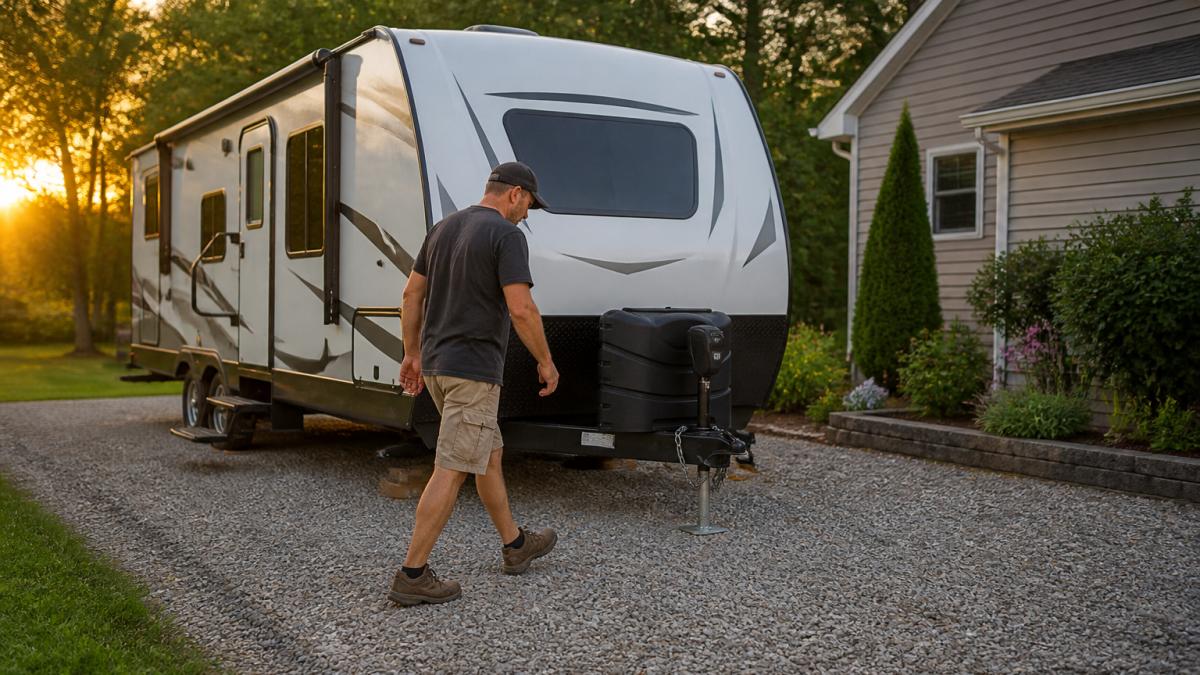
Home RV storage ideas start with the space you already own. Parking at home eliminates rent, removes the drive to a facility, and keeps the vehicle where you can check on it. The catch: not every property has room, and local rules often decide the question before you do.
Driveway and Side-Yard Parking
A driveway or side yard is the simplest option and costs nothing beyond the space itself. It works best when the pad is level, firm, and out of the main sightline from the street. A common mistake is parking on soft ground in spring and finding the jack feet sunk a few inches by summer.
Garage and Enclosed Building Storage
Garage storage offers the most protection of any home option, but height is the usual dealbreaker, most travel trailers and motorhomes don't clear a standard residential door. When they fit, you get full weather protection and security in one move. When they don't, an enclosed building on the property is the practical next step.
Covered RV Parking: Protection Without a Full Facility
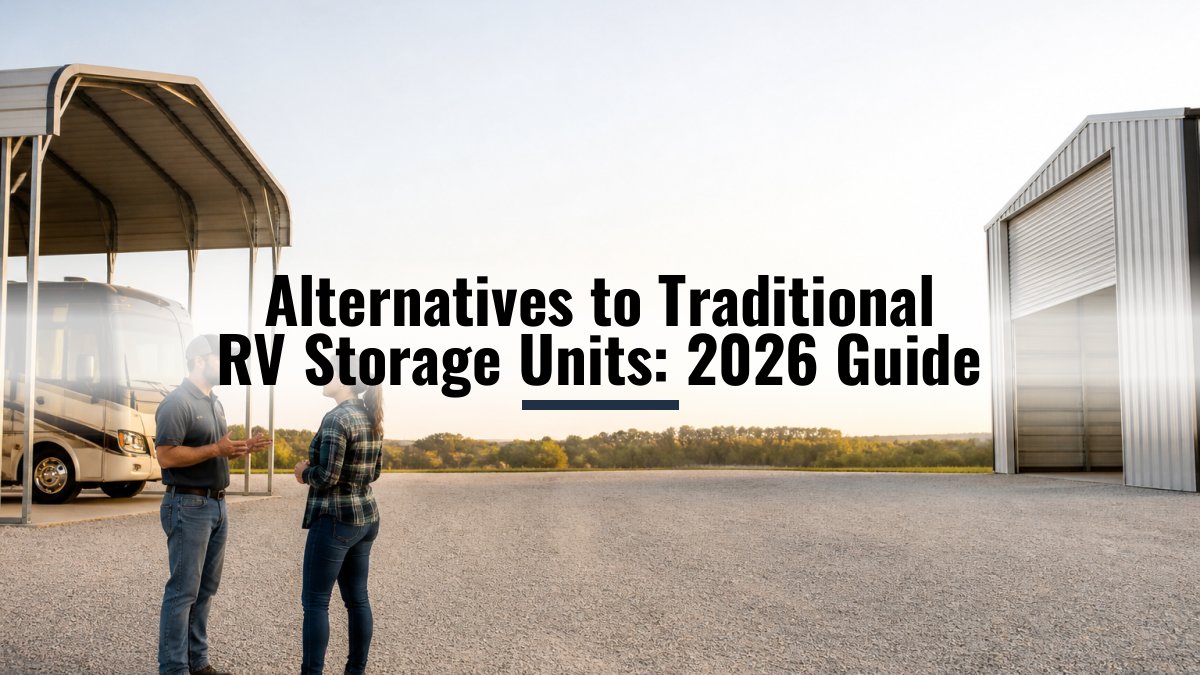
Covered RV parking is the middle path: a roof over the vehicle without the walls, lease, or drive of a full facility. It blocks direct sun and most rain while keeping the rig at home and easy to access. For most owners, this is the option that balances protection against cost and convenience.
Sun exposure degrades sealant, tires, and gel coat far faster than most people expect. A roof that shades the vehicle through the middle of the day slows that decline without the expense of a fully enclosed building, and you still get airflow, which matters in humid regions where trapped moisture causes its own problems.
RV Storage Requirements: Size, Access, and Local Rules
RV storage requirements come down to three questions: does it fit, can you get in and out, and is it allowed. Most guides stop at the first two, but local rules are where plans actually die. Work through all three in order, because a rig that fits perfectly is still a problem if the code says no.
Step 1: Measure the vehicle honestly
Start with the numbers on the vehicle, not the brochure. Measure the actual length bumper to hitch, the width including mirrors, and the total height with roof vents, antennas, and air conditioning units in place. Then add working clearance: roughly two to three feet on each side to walk around and check tie-downs, and enough length in front of the tongue for the tow vehicle to swing.
Step 2: Confirm the approach and the surface
A pad is only usable if you can get the rig onto it. Backing a travel trailer into a side yard between a fence and a house requires swing room for the tow vehicle; a motorhome needs a turning radius that clears the street, the mailbox, and the neighbor's landscaping. Walk the path with the tow vehicle before you commit.
Step 3: Check zoning, HOA, and permit rules before you build
This step decides viability, and it varies block by block. Work through it in this order:
- Municipal zoning and parking rules. Many jurisdictions restrict where a recreational vehicle may be parked, how far it must sit from property lines (setbacks), whether it can be visible from the street, and how long it may remain. Some prohibit parking on unpaved surfaces or in front yards entirely. Call your local planning or code enforcement office and ask specifically about RV parking and accessory structures on residential lots.
- Homeowners association covenants. HOA documents often go further than the city: requiring the RV be behind a fence or under cover, capping the number of vehicles, or banning them outright. Read the covenants and architectural review rules, not just the bylaws summary, and get any architectural committee approval in writing before you buy anything.
- Permit triggers for structures. A permanent carport or enclosed building frequently requires a building permit, and the structure must meet local wind, snow, and frost-depth rules. Ask whether your jurisdiction treats an open-sided carport as an accessory structure requiring a permit, and what engineered drawings it wants with the application.
The HUD guidance on local land use and zoning explains how local governments set land-use rules, but your own municipality and HOA documents are the final word. A short call to the planning office and a careful read of the covenants will tell you in an afternoon whether home storage is viable, and if it is not, that answer saves you from a much more expensive mistake later.
Why an RV Carport Beats Open-Air and Shared Storage
An RV carport beats open-air and shared storage because it protects the vehicle while keeping it on your own property. Open-air storage leaves the rig fully exposed to sun and rain.
This is where our approach matters. Metal Carport Depot LLC builds custom-sized RV covers in galvanized steel, engineered and certified for local wind and snow loads.
Side-by-Side Cost Comparison: What Each Alternative Really Costs
The real cost of each option is not the sticker price, it is the total over a realistic ownership horizon. A storage unit charges you every month forever; a structure is a one-time purchase that adds to your property. To compare them fairly, build a total annual cost for each option using the same five buckets, then multiply by the number of years you expect to keep the RV.
The five cost buckets
- Recurring space cost. Monthly rent for a facility, yard, or shared space; zero for your own driveway or a structure you own.
- Upfront and setup cost. Deposit and first month for rentals; pad preparation, permits, and structure purchase for home options.
- Insurance and liability. How your policy treats the vehicle at each location, and whether you need added coverage.
- Maintenance and wear. Washing, waxing, sealant checks, tire replacement, and cover replacement, higher for open-air storage, lower under cover.
- Access and travel cost. Fuel and time to reach the site each time you use or check the RV, plus any booking or gate fees.
How the alternatives compare
| Option | Recurring space cost | Upfront / setup | Insurance & liability | Maintenance & wear | Access & travel | Control |
|---|---|---|---|---|---|---|
| Traditional storage facility | Monthly rental, indefinite | Deposit and first month | Ask insurer; facility security may affect terms | Moderate; enclosed but shared site | Drive each use; business hours | None |
| Self-storage unit | Monthly rental | Deposit | Ask insurer; shared site | Moderate | Limited hours; drive each use | None |
| Outdoor storage yard | Monthly rental | Deposit | Ask insurer; open-air exposure | High; full sun and weather | Limited hours; drive each use | None |
| Shared storage or co-op | Monthly or per-use fee | Deposit | Varies by host; confirm responsibility | Varies by host upkeep | By arrangement | None |
| Driveway or side yard | None | None | Home policy applies; confirm RV coverage | High; open-air exposure | None; at home | Full |
| Garage or enclosed building | None | Build or convert | Home policy applies; structure may add value | Low; full protection | None; at home | Full |
| Covered RV carport | None | One-time purchase plus pad and permit | Home policy applies; confirm structure coverage | Low to moderate; roof blocks sun and most rain | None; at home | Full |
Turning the table into a number
Once you annualize, the pattern is straightforward. Rented space is a recurring cost you never recover, and it rises over time. A carport or enclosed structure is a one-time cost that stays with the property and can add to resale value. Over a multi-year horizon, the structure's annualized cost typically falls below the rental's, and the gap widens the longer you keep the RV.
Build a simple annual total for each option: (monthly rent × 12) + insurance difference + maintenance + travel, versus (structure purchase + pad + permit) ÷ years owned + insurance difference + reduced maintenance. Compare the two annual figures, not the monthly rent against the purchase price.
For exact structure pricing, our website shows state-specific figures through the design tool, so you get a real number for your configuration rather than a range. Pair that with your own rent quote and the five buckets above, and the comparison becomes a decision rather than a guess.
Insurance, Liability, and Maintenance Differences
Insurance coverage and liability change the math more than most owners expect.
Maintenance follows the same logic. A vehicle stored outdoors needs more frequent washing, waxing, and sealant checks, and tires and covers degrade faster under constant sun. Covered storage reduces that workload.
The challenge is simple: rented space never becomes yours, and open-air parking slowly wears your rig down.
Frequently Asked Questions
Where can you store an RV when it is not in use?
You have four main choices: a traditional storage facility, a self-storage or outdoor storage yard, a shared or private-host space, or your own property. Storing at home in a driveway, garage, or under a covered RV parking structure usually costs the least over time because you avoid monthly rent. Check local zoning rules and HOA restrictions before you park, and confirm your rig fits the space with room to open slides and walk around it.
What are the best alternatives to traditional RV storage units?
The strongest alternatives are home RV storage on your own property, covered RV parking under a metal RV carport, garage or enclosed building storage, and shared storage through a private host. Each avoids the monthly rental fee of a traditional facility. A metal RV carport is often the best balance because it protects the roof and sides from sun and rain, keeps the rig on your property, and can be sized to your exact vehicle dimensions.
Can you store an RV at home, and what should you check first?
Yes, many owners store an RV at home, but confirm three things first. Check zoning rules and any HOA covenants that limit parking restrictions or require screening. Measure your vehicle dimensions, including height with roof vents and AC units, against your driveway, side yard, or garage clearance. Plan for access so you can pull in and out without blocking the street, and confirm your insurance coverage extends to a vehicle parked on private property.
Is covered outdoor storage better than uncovered RV parking?
Covered storage is generally better for long-term parking. An open-air spot leaves the roof, seals, and gel coat exposed to sun and rain, which speeds up fading, cracking, and water intrusion. A covered RV parking structure blocks direct sun and sheds rain while still letting air move around the rig. That reduces maintenance and helps protect from the elements without the cost of a fully enclosed building.
Can a metal building or carport be used for RV storage?
Yes. A metal RV carport is built for exactly this use. Look for a structure certified for your local wind and snow loads, sized to your vehicle with clearance for slides and roof equipment, and anchored to a proper pad. Metal Carport Depot LLC offers custom sizes at no extra charge, engineered drawings for building permits, and professional installation included in the price across its service area. Call 1-800-324-5315 to confirm delivery to your location.