 comparison
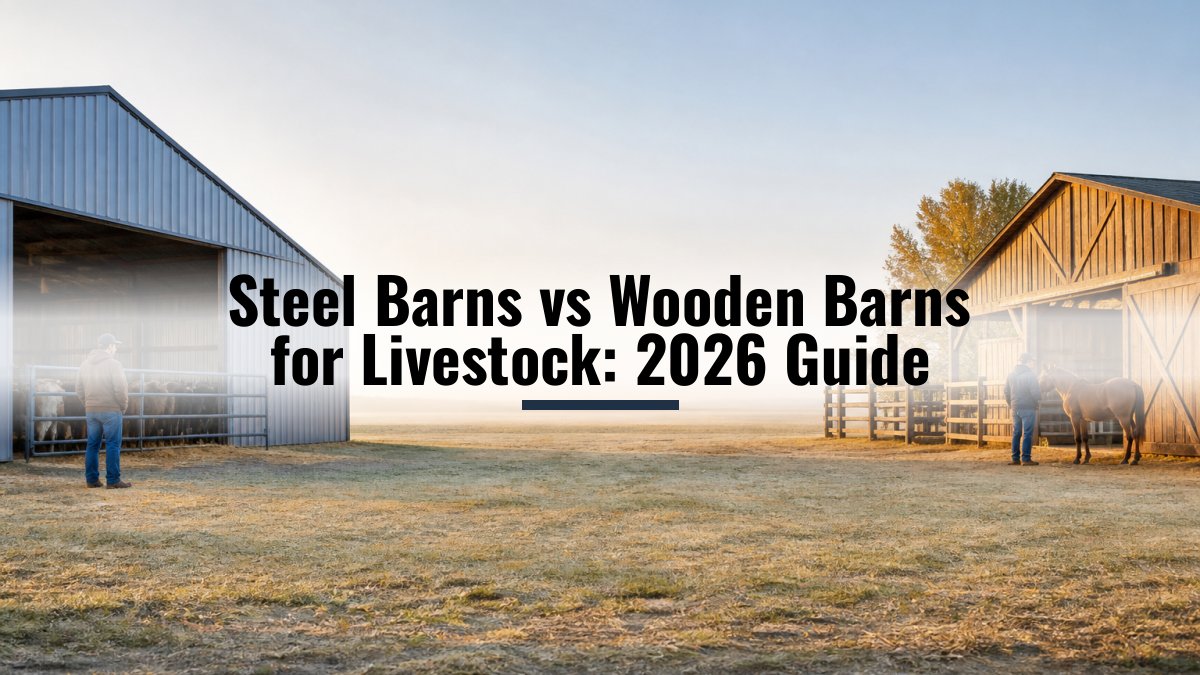
Steel Barns vs Wooden Barns for Livestock: 2026 Guide
Table of Contents
- Steel Barns vs Wooden Barns for Livestock: The Short Answer
- Metal Barns for Livestock: What Steel Offers Your Herd
- Wooden Barns for Livestock: Where Timber Still Wins
- Cost to Build a Steel Barn vs a Wooden Barn
- Steel Barn Durability and Maintenance Over the Long Run
- Livestock Barn Ventilation and Insulation in Steel vs Wood
- Which Barn Material Is Better for Animal Comfort and Safety?
- Conclusion: Choosing the Right Barn for Your Operation
- Frequently Asked Questions
Last Updated: October 20, 2026
Steel Barns vs Wooden Barns for Livestock: The Short Answer
Steel barns vs wooden barns for livestock comes down to one split: steel wins on longevity, fire resistance, and pest control, while wood wins on upfront cost and interior customization.
Steel barns use galvanized steel framing and metal panels; wooden barns use treated lumber posts with wood or metal siding. Each material changes how the building handles moisture, fire, pests, and daily cleaning.
Most guides compare materials in isolation and ignore how the barn performs with animals inside. Ventilation, condensation, and washdown matter more than the framing itself.
Metal Barns for Livestock: What Steel Offers Your Herd
Steel delivers three practical advantages for livestock: it does not rot, it does not feed termites, and it resists fire.
Galvanized steel framing holds up to moisture and temperature swings that warp untreated wood, and smooth panels do not absorb urine or manure, so washdown is quicker and odor stays lower.
- Fire resistance: Steel is non-combustible, which reduces fire risk from hay, bedding, and equipment.
- Pest resistance: Termites and rodents cannot chew through steel panels the way they damage wood.
- Low maintenance: No repainting, no replacing rotted boards, no treating for insects.
- Custom sizing: Clear-span steel framing opens up interior space for pens, alleys, and equipment.
The trade-off is thermal behavior. Steel conducts heat and cold, so insulation and ventilation planning matter more than they do in a wood building. Get that right and a metal barn performs well year-round.
Wooden Barns for Livestock: Where Timber Still Wins
Wood still earns its place on smaller operations and tighter budgets.
Wood framing accepts standard nails, screws, and fasteners, making it simple to add stall dividers, hay feeders, and tack room walls after the barn goes up.
The catch is upkeep. Treated wood resists rot and insects only for a while; moisture from urine, manure, and condensation breaks it down, especially at post bases and wall bottoms.
Fire risk is the other concern. Wood is combustible, and a barn full of dry hay and bedding gives fire plenty to work with.
Cost to Build a Steel Barn vs a Wooden Barn
Wood often costs less upfront for small structures, while steel tends to win on long-term cost per year of service. Steel barn cost depends on size, span, wind and snow loads, foundation, and site prep, so figures vary widely by project.
A fair comparison looks at total ownership, not just the shell:
| Cost Category | Steel Barn | Wooden Barn |
|---|---|---|
| Initial material cost | Higher for small spans | Lower for small structures |
| Construction time | Faster assembly | Slower, more labor hours |
| Maintenance over life | Minimal | Repainting, re-treating, repairs |
| Pest and rot repair | Rare | Recurring risk |
| Fire damage risk | Lower | Higher |
| Service life | Long | Shorter without heavy upkeep |
Steel Barn Durability and Maintenance Over the Long Run
Steel barn durability and maintenance is where the material gap widens. Galvanized steel holds structural strength for decades with little more than occasional inspection, while wood demands ongoing attention.
Galvanized framing resists corrosion, and metal panels shrug off wind and snow loads when certified for your area. There are no boards to rot, no posts to replace, and no repainting cycle.
Wood needs a schedule: inspect for rot at post bases and the bottom plate, re-treat exposed lumber, and repaint or restain as the finish wears.
Livestock Barn Ventilation and Insulation in Steel vs Wood
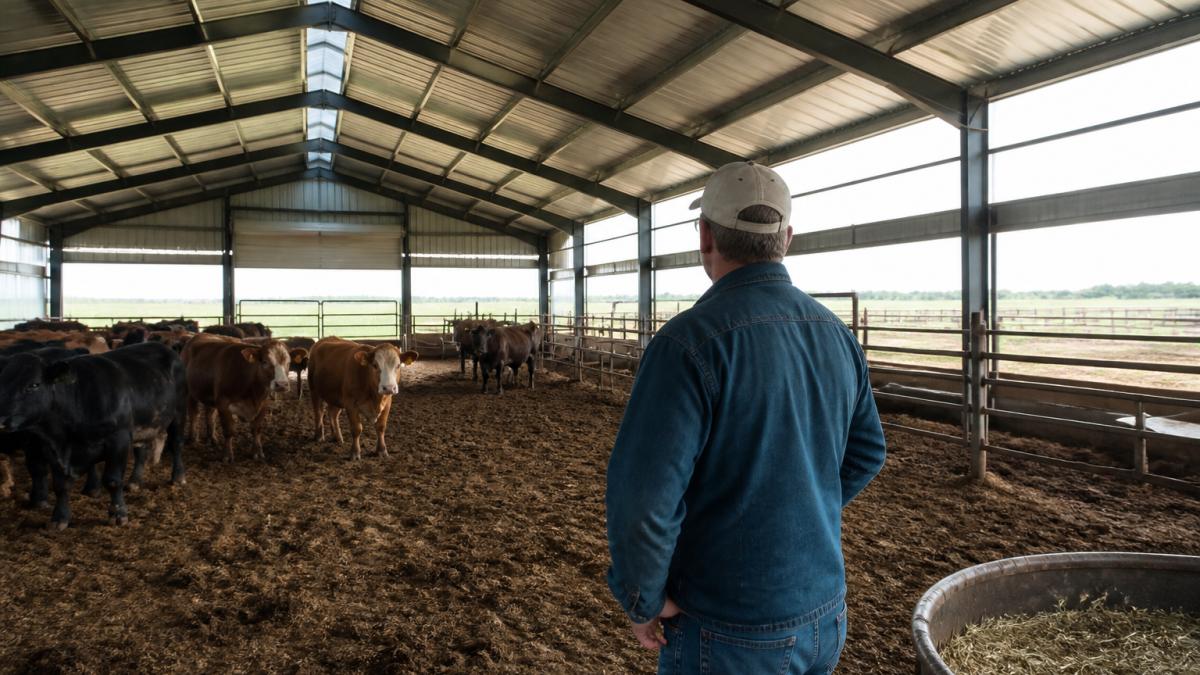
Livestock barn ventilation and insulation is the single biggest factor in animal health, and it works differently in steel and wood. The framing choice matters less than whether the building moves moist air out and keeps condensation off animals.
Why livestock barns need a different ventilation plan
Animals produce two things that damage barns and lungs: moisture and ammonia. Cattle, hogs, and poultry exhale water vapor and produce urine and manure that release ammonia as it breaks down. In a tight building, that raises humidity, keeps bedding damp, and irritates respiratory tissue.
A common pattern is a ridge vent paired with adjustable sidewall openings or eave inlets. In cold weather, bring in a small amount of fresh air high and let it warm before it drops to animal level, avoiding drafts on newborn stock. In warm weather, open the building up and use cross-ventilation.
How steel barns handle condensation and insulation
In a metal barn, warm moist air from animals meets cold steel roof panels and condenses, dripping onto bedding and animals. The practical fixes are well understood:
- Ridge vents and sidewall openings to exhaust moist air at the highest point.
- Insulation under the roof panels to keep the panel surface closer to interior air temperature and stop condensation at the source.
- Vapor management so moist air leaves the building rather than migrating into insulation cavities.
- Airflow at animal level using open ridge, eave inlets, or mechanical ventilation sized to the herd.
Steel conducts heat and cold, so insulation planning matters more than in wood. Get airflow and insulation right and a metal barn stays dry year-round; skip it and you get drip, damp bedding, and higher ammonia levels.
How wooden barns handle moisture and airflow
Wood absorbs and releases some moisture, softening the condensation problem but not eliminating it. Timber barns still need ridge ventilation and open eaves. Insulation is easier to add because standard batts fit between studs, and wood framing gives more places to run wiring and ductwork.
The trade-off is that wood holds moisture and odor. Damp wood framing and bedding can sustain mold and bacteria, so airflow design still has to be deliberate. A wooden barn with closed eaves and no ridge vent will be just as stuffy and damp as a sealed metal barn.
Matching ventilation to species and season
Different livestock have different airflow needs. Poultry are sensitive to ammonia and need steady air exchange without chilling chicks. Hogs need strong summer ventilation and careful winter management against drafts and temperature swings.
Seasonal management matters as much as the building. In summer, maximize cross-ventilation and shade. In winter, reduce airflow to the minimum needed to control humidity and ammonia, using adjustable inlets so fresh air mixes before it reaches animals.
warning The most common ventilation mistake in any barn is sealing it up in cold weather to keep animals warm.
For livestock, ventilation and insulation are health decisions, not comfort extras. Steel needs deliberate condensation control; wood needs deliberate airflow. Both need a plan sized to the species and the season.
Which Barn Material Is Better for Animal Comfort and Safety?
Animal comfort and safety is where material choice meets daily management. Steel wins on cleanliness, fire resistance, and pest control; wood can match it on comfort with careful design. Material matters less than how the barn handles moisture, airflow, footing, and the surfaces animals touch.
Surfaces, edges, and livestock contact
Animals rub, lean, and bump against barn surfaces, so what they contact matters. Steel panels are smooth and easy to wash, lowering the buildup of waste and dirt that harbors bacteria, but exposed fasteners, cut panel edges, and sharp corners are injury risks.
Wood offers warmer surfaces to the touch and a more forgiving interior for animals that bump against walls. It also accepts rubber matting and stall hardware easily.
Treated wood, coatings, and feed-contact areas
Treated lumber is common in agricultural buildings, and the treatment resists rot and insects. Keep treated surfaces out of direct feed and water contact, and use appropriate liners, feeders, and troughs rather than relying on the framing.
Steel has its own contact considerations. Galvanized coatings are durable, but damaged coatings expose bare steel that can corrode, especially in urine-rich areas. Inspect and repair coating damage at animal height, and keep feed and water areas lined or separated from bare metal where practical.
Footing, bedding, and daily cleaning
Comfort starts at the floor. Both steel and wood barns perform well with proper footing: dry bedding, rubber mats in alleys and stalls, and drainage that moves wash water and urine away from animal areas. Steel's smooth walls make washdown faster; wood's absorbent surfaces hold moisture and odor, so cleaning must be more thorough and bedding kept dry.
Layout and daily workflow
Layout matters as much as material. Pens, alleys, and gates should support feeding, watering, moving animals, and cleaning. Clear-span steel framing opens interior space for pens, alleys, and equipment, and makes future expansion easier because interior posts do not dictate the floor plan.
For different species and herd sizes, the practical questions are the same: Can you move animals safely through the handling area? Can you get feed and equipment where needed? Can you clean and re-bed quickly? A well-planned steel barn with proper ventilation outperforms a poorly planned wooden one, and the reverse is also true.
Fire and pest safety
Steel is non-combustible, which reduces fire risk from hay, bedding, and equipment. Termites and rodents cannot chew through steel panels the way they damage wood. Wood is combustible, and a barn full of dry hay and bedding gives fire plenty to work with. That does not rule out timber, but it does mean stricter housekeeping, fire planning, and pest inspection.
Pick the material that fits your climate and maintenance habits, then invest your planning time in ventilation, layout, and safe surfaces. Those decisions drive animal comfort and safety more than the framing ever will.
Conclusion: Choosing the Right Barn for Your Operation
Choosing between steel and wood comes down to how long you plan to keep the barn and how much upkeep you want. Steel costs more upfront in many cases but asks far less over the years.
If you want a structure that resists fire, pests, and rot with minimal upkeep, a steel barn is the stronger pick. Metal Carport Depot LLC builds engineer-certified steel barns with galvanized framing, custom sizes at no extra charge, and professional installation included.
Call 1-800-324-5315 to talk through your barn project and get a structure sized for your herd.
Frequently Asked Questions
Which is better for livestock, a steel barn or a wooden barn?
For most livestock operations, steel barns win on durability, pest resistance, and long-term maintenance. Steel framing does not rot, warp, or feed termites, and smooth metal walls can be washed down between groups of animals. Wooden barns still make sense when you want traditional appearance, heavy interior tie-offs, or plan to build in small stages. The right choice depends on your climate, herd size, and how much upkeep you want to take on.
Are steel barns cheaper than wooden barns to build?
The cost to build a steel barn is often lower per square foot than a wooden barn of similar span, because steel framing and panels are prefabricated and install quickly. However, final cost depends on size, foundation, insulation, doors, and local labor rates. Request a state-specific quote with wind and snow load ratings included so you can compare apples to apples.
How do steel and wooden barns compare for maintenance?
Steel barn durability and maintenance favor steel over time. Galvanized steel framing resists rust, and painted panels need only occasional washing. Wooden barns require periodic painting or staining, board replacement, and pest treatment. In livestock environments with high humidity and ammonia, wood absorbs moisture and degrades faster, while steel sheds water and dries quickly.
Can steel barns be customized for livestock housing?
Yes. Metal barns for livestock can be configured with open bays, stall dividers, feed rooms, roll-up doors, and ridge vents. Custom sizing lets you fit alleyways, headlocks, and equipment without wasted space. Many suppliers offer a 3D design tool so you can lay out stalls and doors before ordering, and engineered drawings are available for permit submissions.
How can you keep livestock comfortable in a steel barn?
Livestock barn ventilation and insulation are the two biggest factors. Use ridge vents, sidewall openings, and fans to move air and reduce ammonia buildup. Insulate the roof to control condensation and temperature swings, and add kick mats or wood lining in stalls where animals rub. Steel barns can be as comfortable as wooden ones when airflow and bedding management are planned from the start.